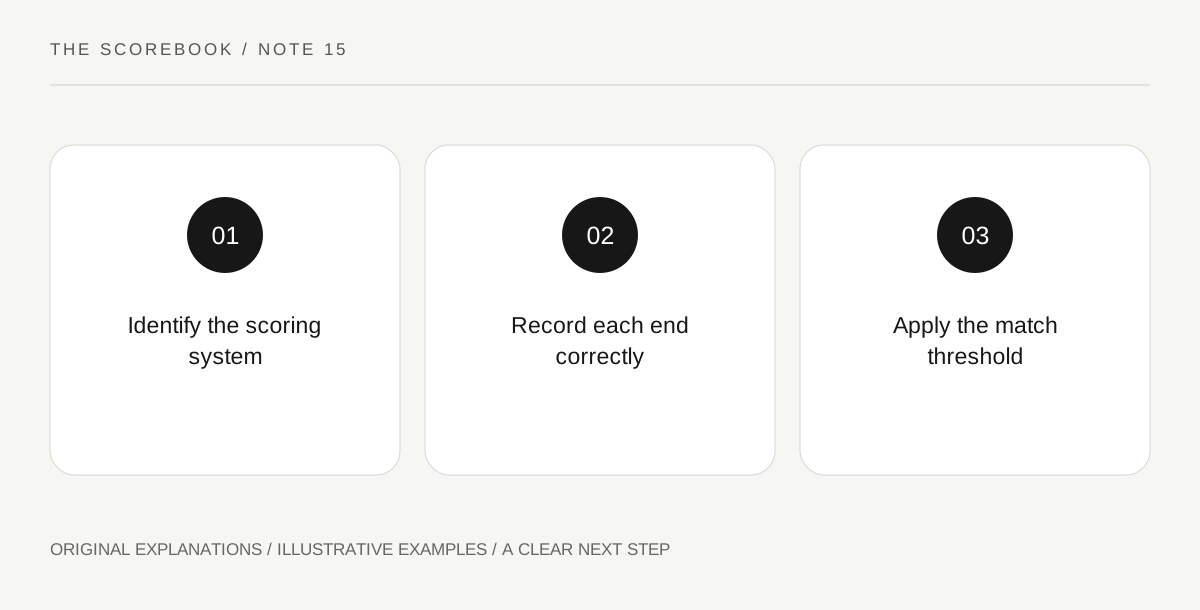
SaveLife & wellbeingTarget archery: set points and arrow totals tell different storiesAn archer can win a recurve match without having the larger combined arrow total across every set. Compound matchplay uses a different scoring logic. Distinguishing arrow values from set points makes the live graphic clearer and explains why one poor set can have very different consequences.20 October 2026 · 3 min read
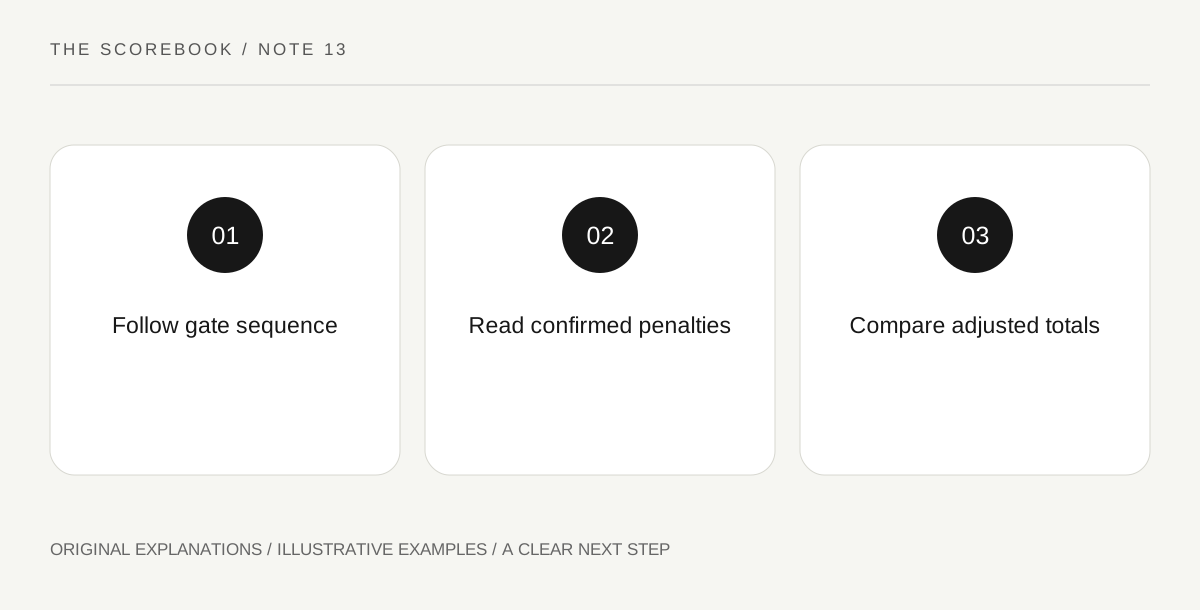
SaveLife & wellbeingCanoe slalom: add the penalties before comparing the clockA fast slalom run can fall behind a slower clean run once gate penalties are included. The watercourse demands a sequence of correctly negotiated gates as well as speed. Follow the course order, gate direction and final adjusted result before deciding which athlete has moved into the lead.20 October 2026 · 3 min read
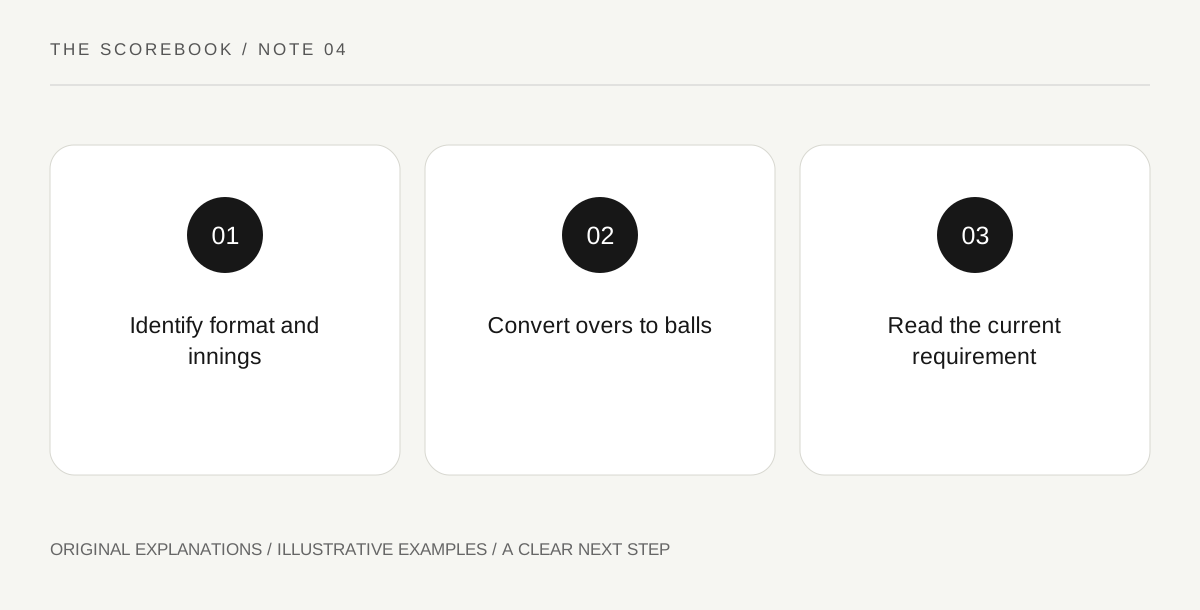
SaveLife & wellbeingRead a cricket score: runs, wickets and overs are different numbersA cricket display such as 86/3 after 12.4 overs contains three kinds of information, not a fraction and a decimal. Once you separate runs, wickets and valid deliveries, the score becomes much easier to follow. The match format then tells you what those numbers mean for the contest.20 October 2026 · 3 min read
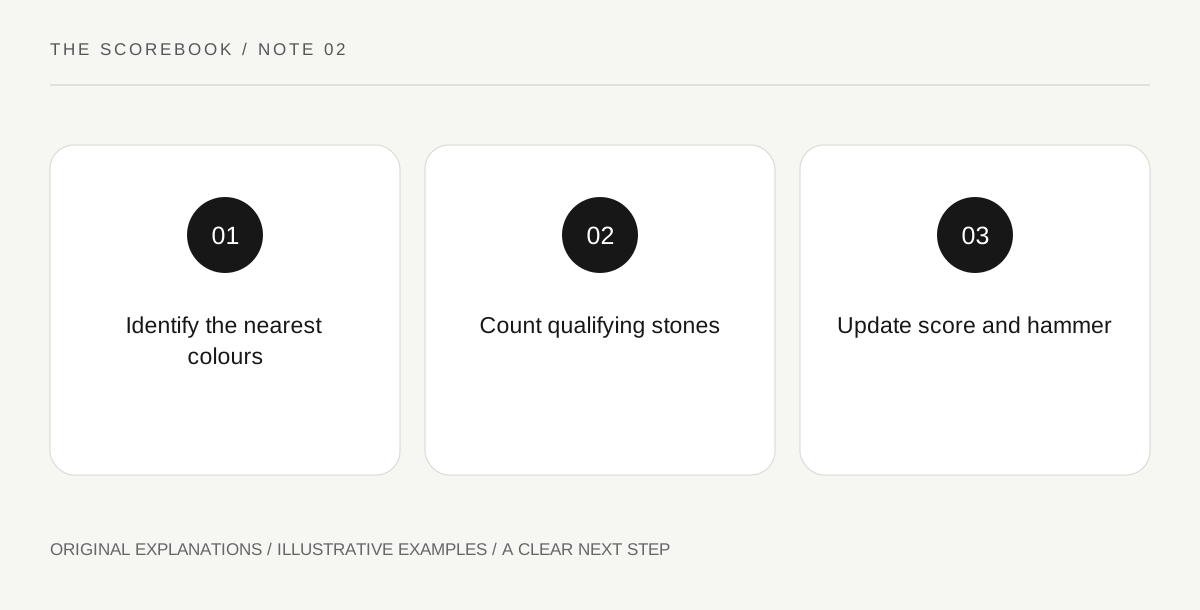
SaveLife & wellbeingCurling: count the stones before interpreting the hammerThe coloured circles in curling are not a target with a different point value on every ring. Scoring depends on which stones are closest to the centre at the end. Understanding that count makes last-stone decisions, blank ends and apparently cautious shots much easier to discuss.20 October 2026 · 3 min read
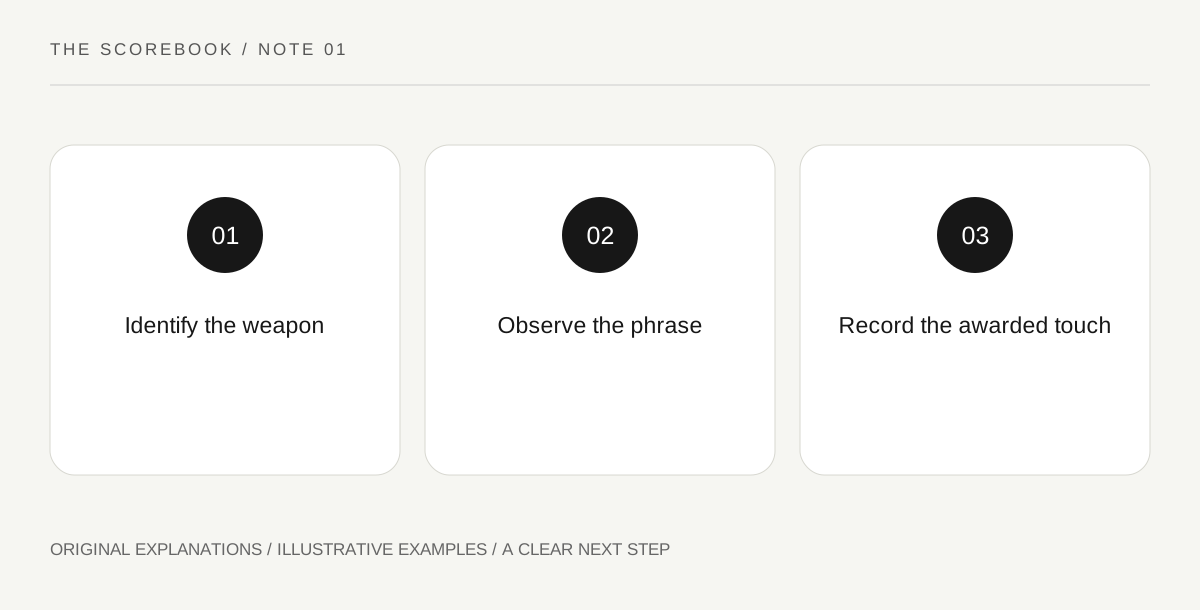
SaveLife & wellbeingFencing lights: why the referee still decides the touchTwo coloured lights can appear after a fencing exchange without two points being awarded. The useful question is which weapon you are watching and what the referee has decided. Learn to separate electrical registration, a valid target and priority before trying to judge a fast exchange yourself.20 October 2026 · 3 min read
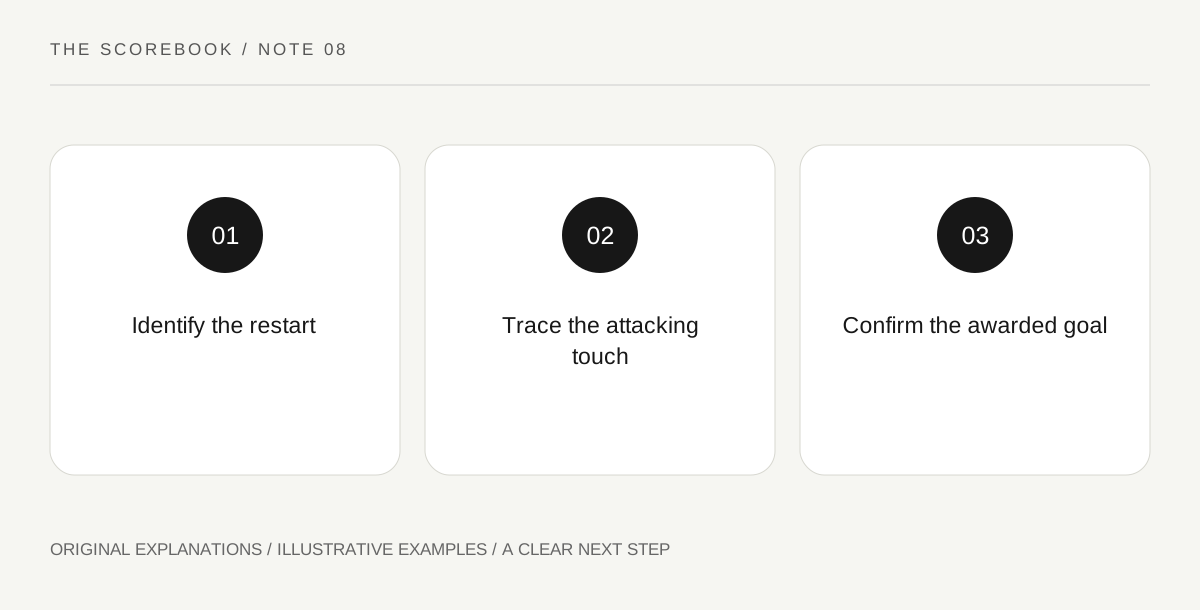
SaveLife & wellbeingField hockey: follow the ball into the scoring circleA long shot that reaches the net is not enough information to establish a field-hockey goal. In outdoor eleven-a-side hockey, the attacker’s play inside the circle is central. Following the ball’s path through that area makes deflections, shots and apparently surprising non-goals easier to understand.20 October 2026 · 3 min read
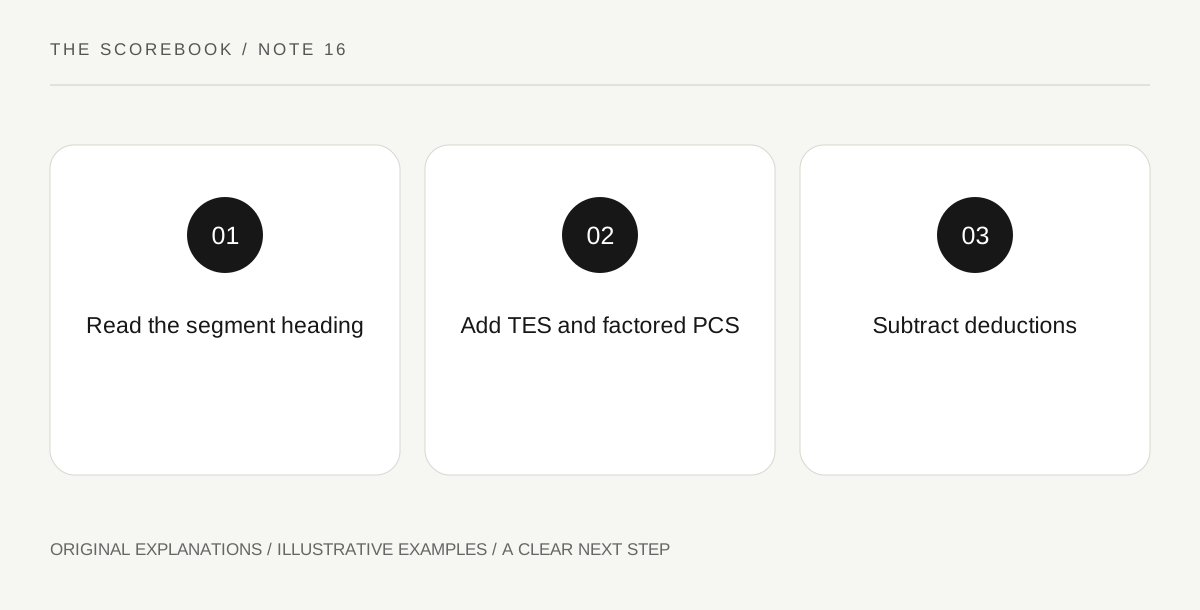
SaveLife & wellbeingFigure skating results: add TES and PCS before subtracting deductionsA figure-skating result has several numbers that can look like competing versions of the same score. Technical elements, programme components and deductions perform different jobs. Read their column labels first, then use the official segment total to understand how the separate pieces fit together.20 October 2026 · 3 min read
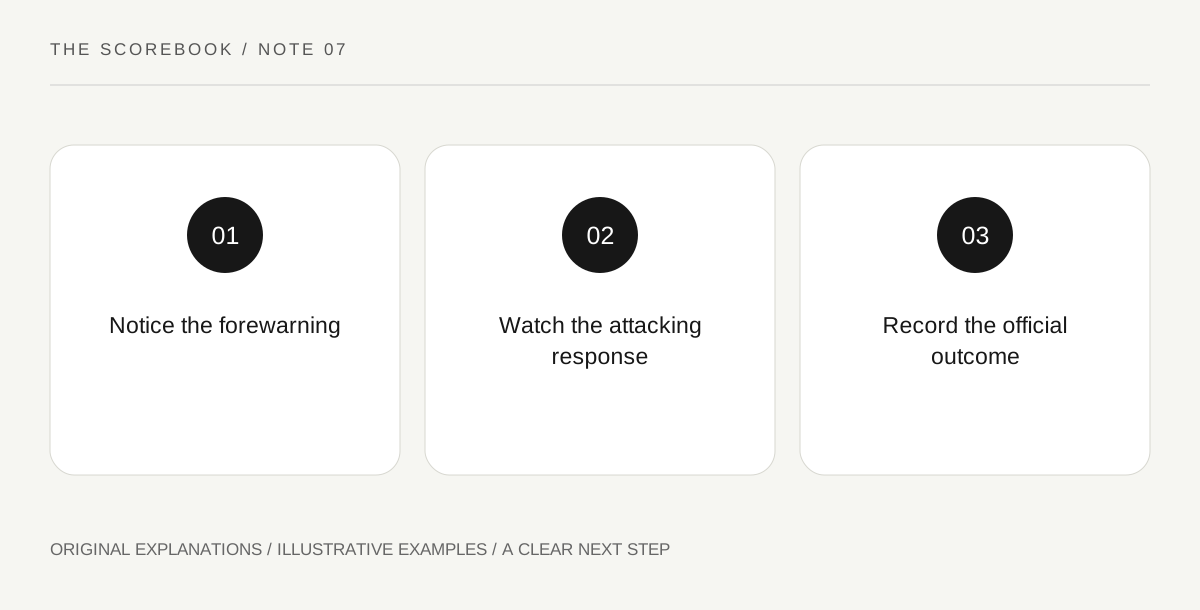
SaveLife & wellbeingHandball passive play: read the raised arm as part of an attackIndoor handball does not become easy to understand by counting passes in every possession. The passive-play warning identifies a particular situation within an attack. Learn to notice that signal, the attackers’ response and the eventual decision while keeping ordinary circulation of the ball in its proper context.20 October 2026 · 3 min read
SaveLife & wellbeingLead climbing scores: a higher hold is different from a faster climbStandalone Lead climbing ranks progress up a route, so a climber who moves slowly can finish above someone who falls sooner at high speed. Hold numbers and the plus symbol describe that progress. Read them within the same route and round before comparing performances.20 October 2026 · 3 min read
SaveLife & wellbeingNordic Combined Gundersen: turn the jumping gap into a chaseNordic Combined links ski jumping with cross-country skiing, but not every format links them in the same way. In an individual Gundersen competition, jumping deficits become delayed starts. Reading that conversion lets you understand how the first athlete over the skiing finish can decide the combined contest.20 October 2026 · 3 min read
SaveLife & wellbeingRowing boat classes and splits: read the race behind the lane numberA rowing programme can list singles, pairs, doubles, fours, quads and eights in a short sequence. The names describe different crews and oar arrangements. Identify the boat class first, then use the race’s distance markers and timing splits to understand how the contest develops.20 October 2026 · 3 min read
SaveLife & wellbeingRugby advantage: follow the opportunity before the whistleA rugby referee may recognize an infringement and still allow the non-offending team to continue. For a newcomer, that can look like an ignored offence or an unexpectedly late whistle. Following the advantage signal and the developing opportunity provides a much clearer way to watch the passage.20 October 2026 · 3 min read