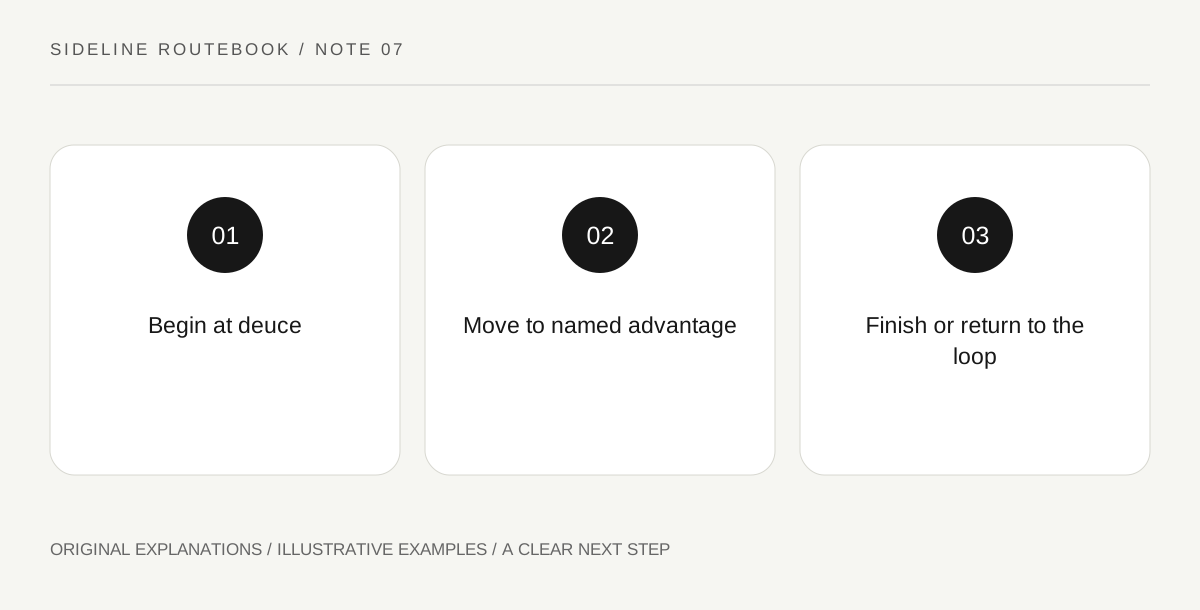
SaveLife & wellbeingFollow the deuce loop without inventing a new game scoreIn a standard advantage game, deuce is a state that can return, not a one-time milestone. Draw a small loop between deuce and advantage to follow the late points without counting every rally from the start. The exercise concerns a standard advantage game; an event using no-ad scoring follows a different finish.20 October 2026 · 3 min read
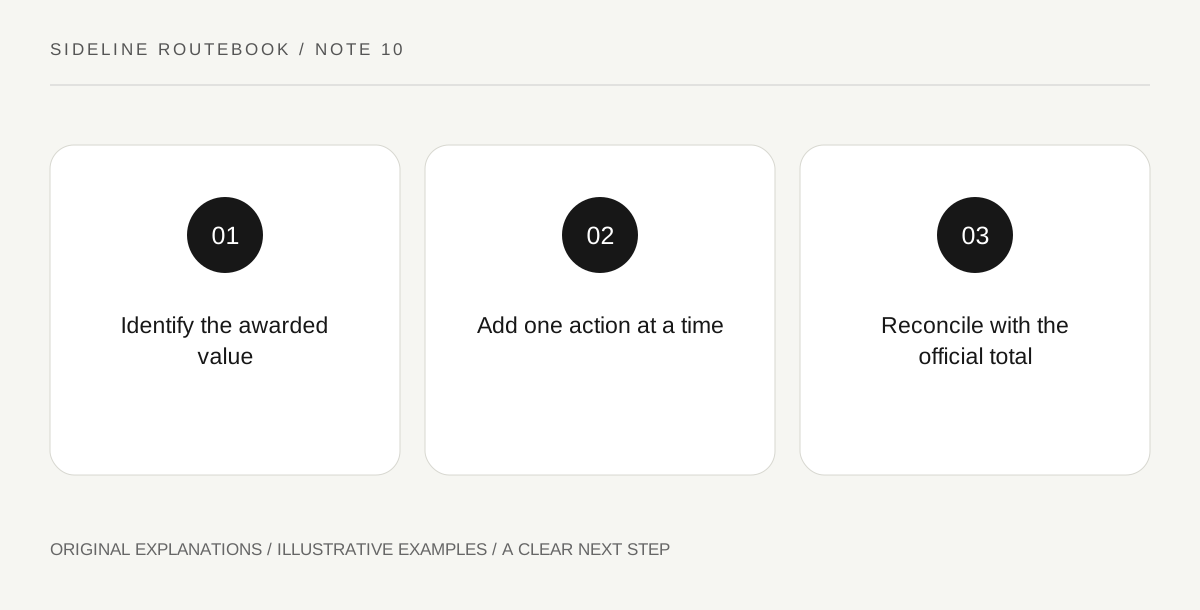
SaveLife & wellbeingReconcile a basketball score change with one-, two- and three-point playsWhen a basketball score jumps, a short arithmetic note can help you understand what the display is counting. Separate successful scoring actions from possessions and shot attempts. This exercise uses ordinary FIBA point values and invented sequences, with no prediction of who will score next or assessment of a player’s performance.20 October 2026 · 3 min read
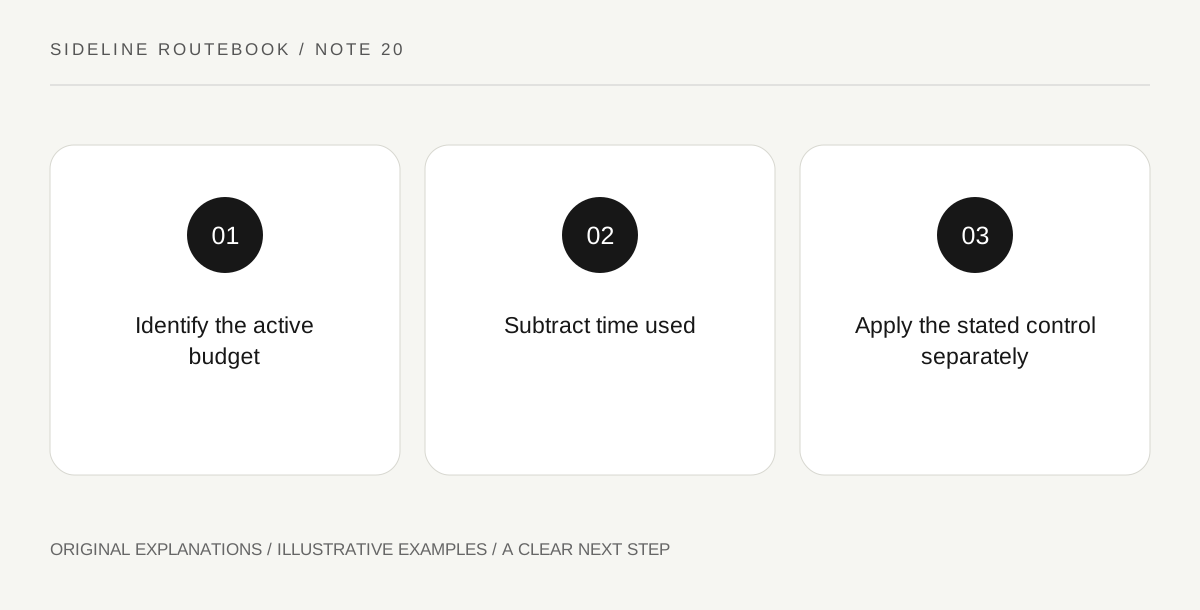
SaveLife & wellbeingRead a chess clock as two separate time budgetsA chess display can show two time budgets even though only one is running during ordinary uninterrupted play. Learn which player’s clock is active, then distinguish time spent from time added by the announced control. This introductory exercise uses invented numbers and avoids making a result claim from a single low clock reading.20 October 2026 · 3 min read
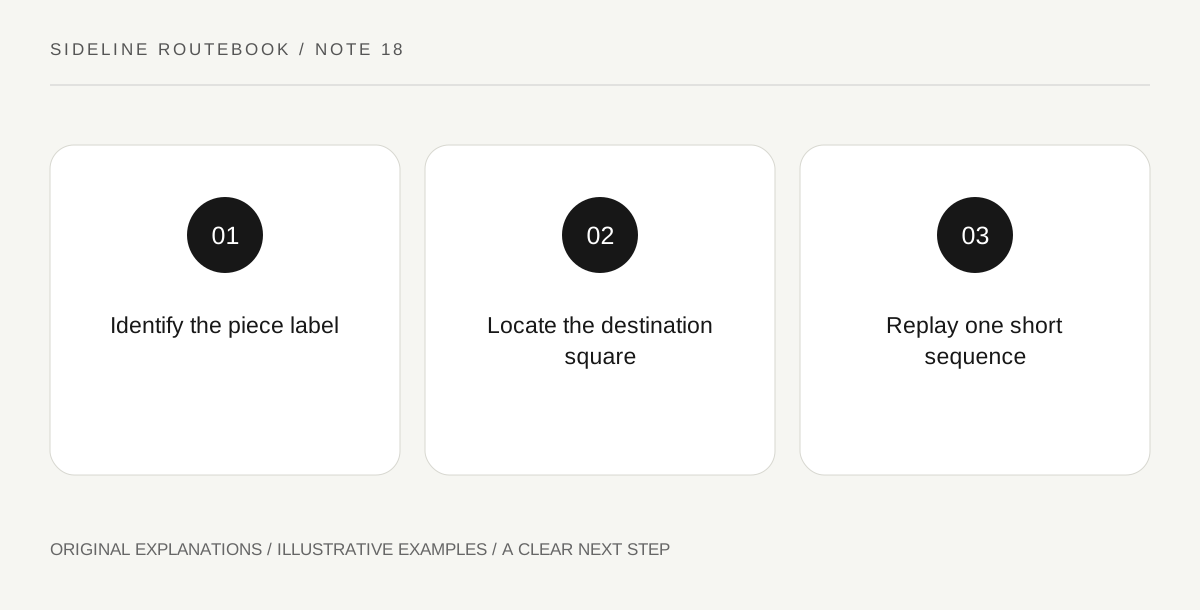
SaveLife & wellbeingDecode a simple chess move without reading the whole scoresheetA chess move such as Nf3 combines a piece label with a destination square. Decode those two parts before trying to replay a long game. This beginner exercise uses a short invented opening and ordinary English algebraic notation, leaving captures, promotions and ambiguous-piece cases for later study.20 October 2026 · 3 min read
SaveLife & wellbeingRead a chess result as a result, not a captured-piece scoreA chess result line uses small numbers that do not count captured pieces. Separate the game result from tournament points and from any informal material evaluation. An invented three-round ledger shows how a player can accumulate standings points without adding the value of the pieces removed from the board.20 October 2026 · 3 min read
SaveLife & wellbeingThe new monochrome journal collectionThirty-seven subjects. Twenty new posts in each journal.
SaveLife & wellbeingSeparate a player’s foul count from the team’s quarter countTwo foul counters on a basketball display can rise after the same incident while measuring different things. Put individual history and the current team-quarter total on separate lines. This introductory FIBA viewing exercise helps you follow the display without assuming that every whistle means free throws or that a team total belongs to one player.20 October 2026 · 3 min read
SaveLife & wellbeingRead the basketball game clock and shot clock as a pairA basketball broadcast can show two countdowns at once. The longer display places play within a quarter, while the shot clock sets a separate offensive timing constraint. Learn to name both before discussing urgency. This exercise compares invented display readings and does not try to reconstruct every reset rule from a highlight clip.20 October 2026 · 3 min read
SaveLife & wellbeingTrack netball centre passes without following the conceding teamA viewer arriving from another sport may expect the side that conceded to restart after every goal. Netball’s alternating centre-pass pattern needs a different notebook. Keep a pass-owner row alongside the score so that a run of goals by one team does not make you lose the next restart.20 October 2026 · 3 min read
SaveLife & wellbeingRead GS and GA before judging a netball shooting opportunityA player catching the ball near a netball goal is not automatically a permitted shooter. Learn to identify the two shooting position labels, then observe where a shot is attempted. This narrow spectator lesson separates player role, court location and the eventual scoring outcome without attempting to explain every movement restriction.20 October 2026 · 3 min read
SaveLife & wellbeingCompare the last point of no-ad and advantage gamesA tied late-game point score can lead to a deciding point or to an advantage loop, depending on the announced format. Put two fictional games side by side and follow what happens next. The comparison helps a viewer ask the right format question before assuming that every deuce will require two more points.20 October 2026 · 3 min read
SaveLife & wellbeingSplit an offside discussion into position and involvementA still image of an attacker ahead of a defender can start an argument without answering the whole offside question. Build a two-question observation card: where was the player at the relevant moment, and how did that player become involved? The separation makes a replay easier to describe without pretending to officiate it.20 October 2026 · 3 min read