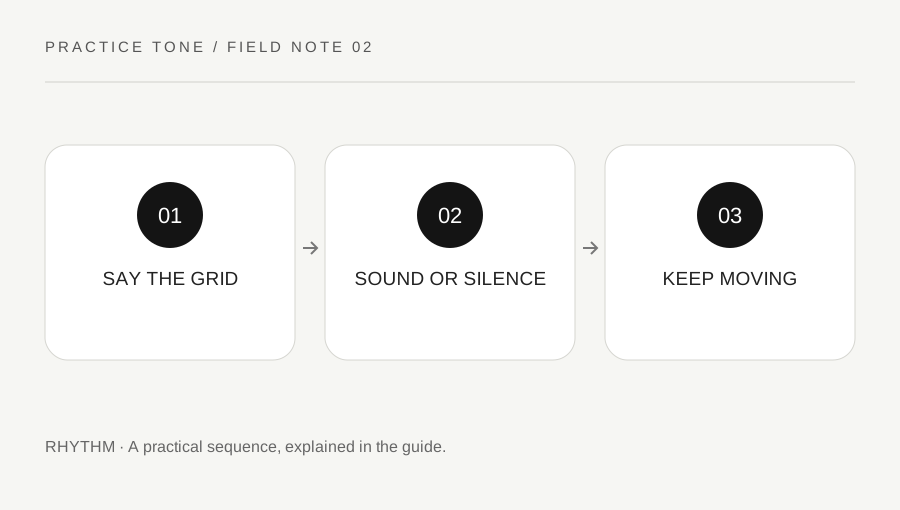
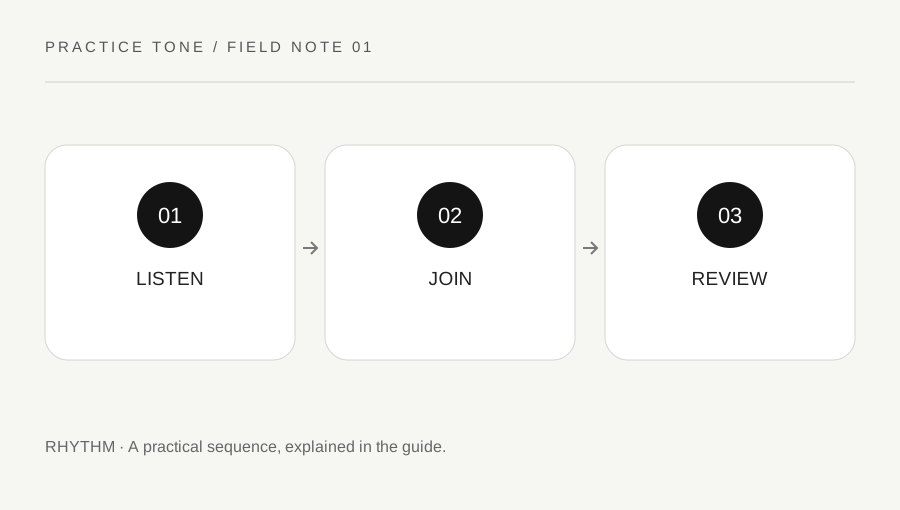
SaveLearning & workCount Eighth Notes and Rests Without Dropping the PulseA rest changes whether you make a sound, not whether musical time continues. Keep a spoken subdivision underneath a short pattern so the silent spaces stay as organized as the notes.4 min read
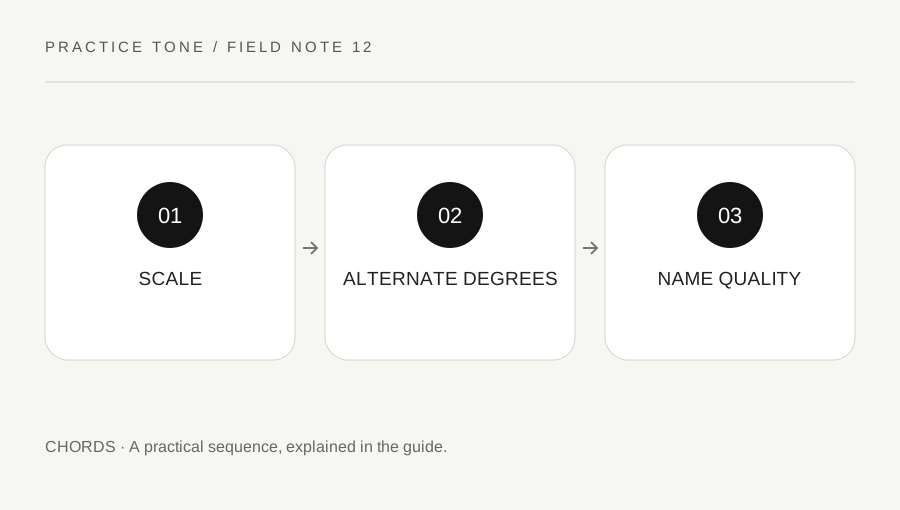
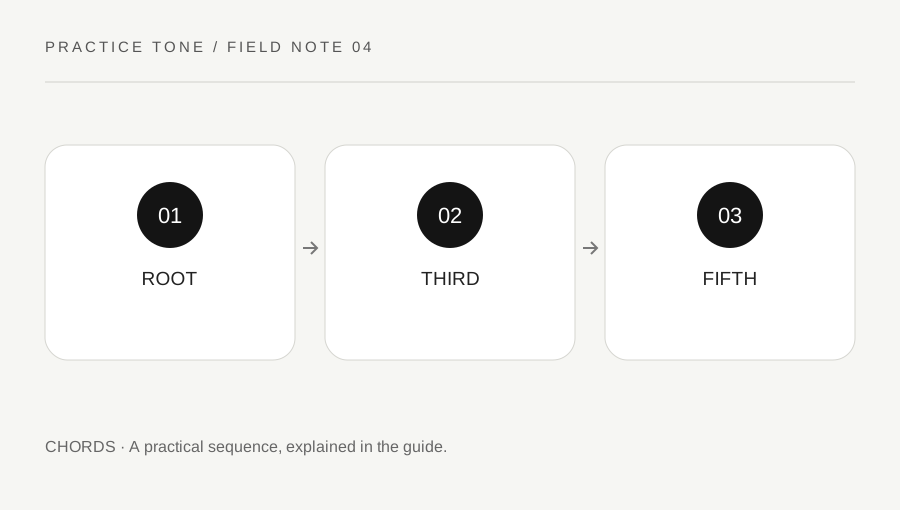
SaveLearning & workBuild the Seven Diatonic Triads of a Major ScaleStack alternate scale degrees to form a triad on each note. The resulting chord qualities follow a useful pattern, but verify the notes so that the pattern has a musical explanation.3 min read
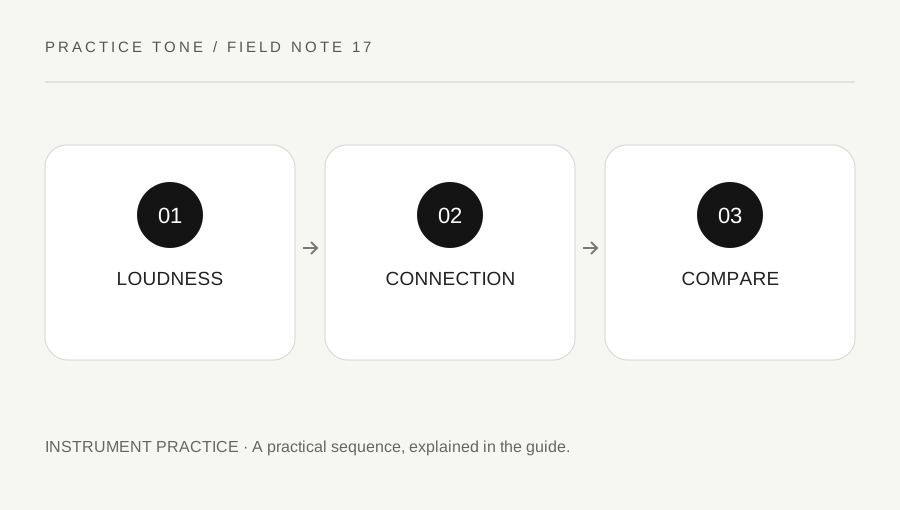
SaveLearning & workDynamics and Articulation: Change Loudness and Connection SeparatelyA note can be quiet and detached or loud and connected. Separate loudness from duration and connection so that one instruction does not accidentally change every part of your playing.4 min read
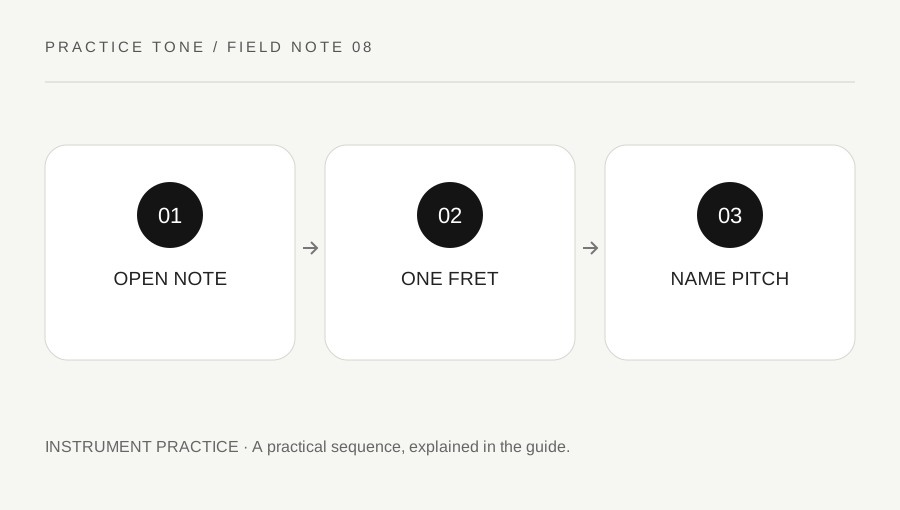
SaveLearning & workGuitar Fretboard Notes: Use One String and Half StepsA standard fret changes pitch by a half step along one string. Use that predictable movement to connect note names with the fretboard before memorizing large diagrams.3 min read
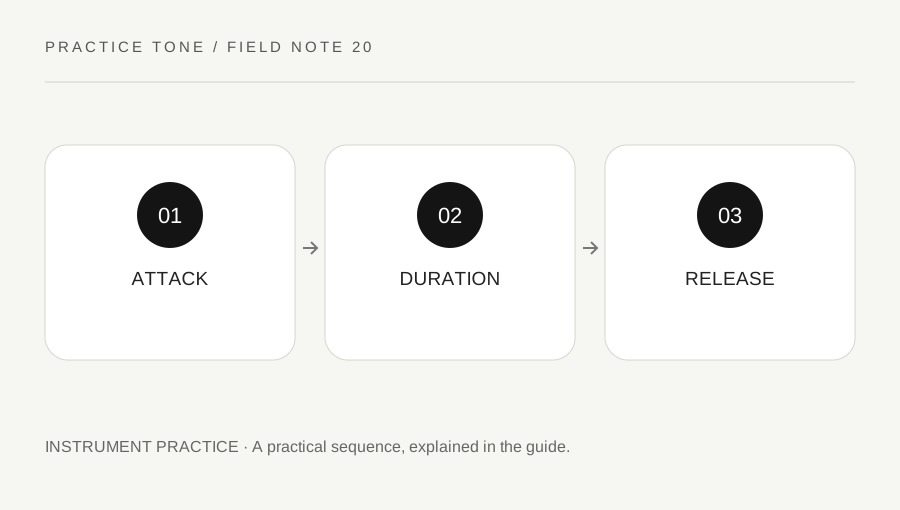
SaveLearning & workGuitar Note Release: Hear the Space Between AttacksNot striking a string again does not always create silence. Practice a simple attack-and-release pattern so that ringing notes, rests and unwanted strings are deliberate parts of the sound.4 min read
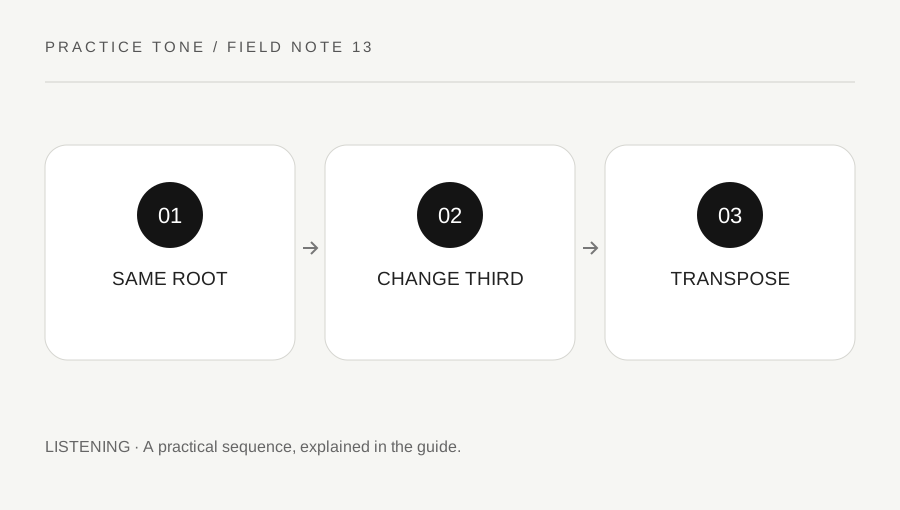
SaveLearning & workHear Major and Minor Thirds With One Controlled ChangeCompare two thirds from the same root so that only the upper note changes. Then move the reference pitch and check whether you recognize the relationship rather than one memorized sound.3 min read
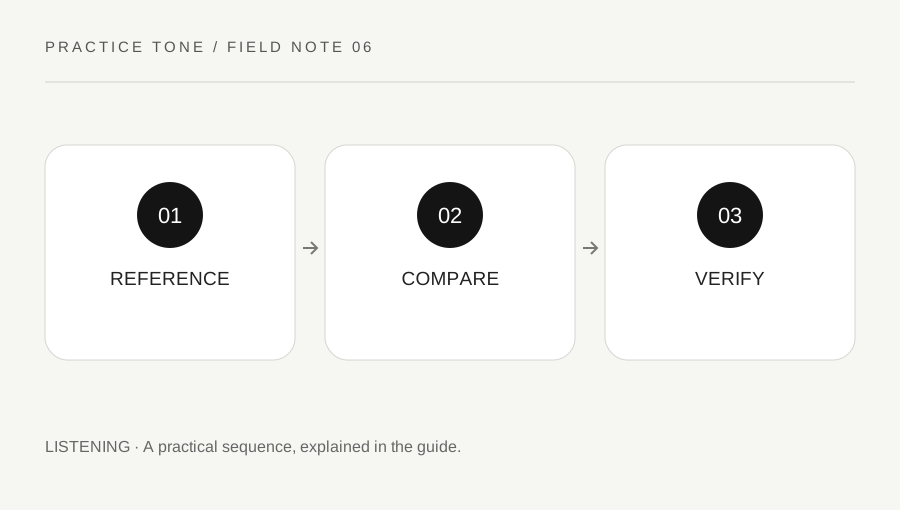
SaveLearning & workStart Ear Training With Two Intervals and a Reference NoteAn interval describes a distance between pitches. Start with a small comparison, keep the reference clear and separate hearing a relationship from memorizing the sound of one particular pair.4 min read
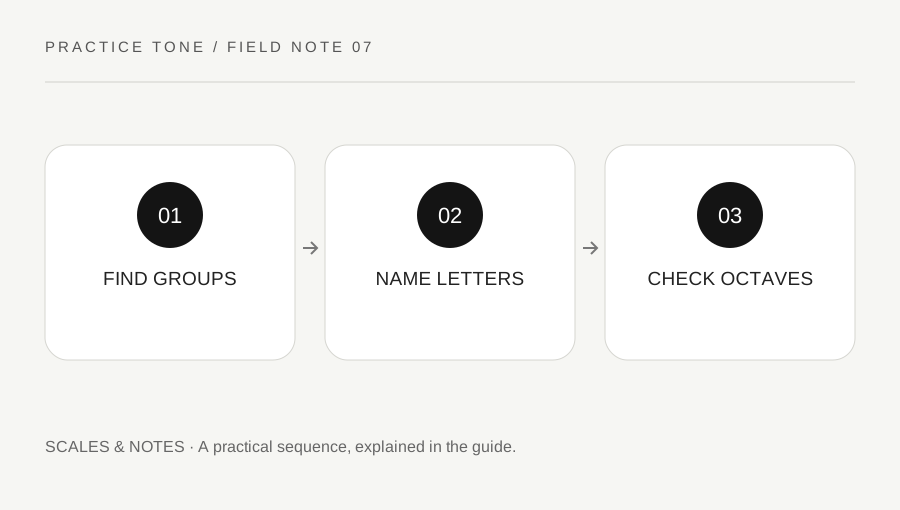
SaveLearning & workFind Piano Note Names Using the Two-and-Three Black-Key PatternThe repeating black-key groups provide dependable landmarks. Learn the letter sequence and the adjacent half steps before trying to recognize every note instantly.4 min read
SaveLearning & workMajor and Minor Triads: Hear What the Third ChangesA triad contains three distinct chord tones. Build a major and a minor version from the same root, then compare the one note that changes while the root and fifth remain fixed.4 min read
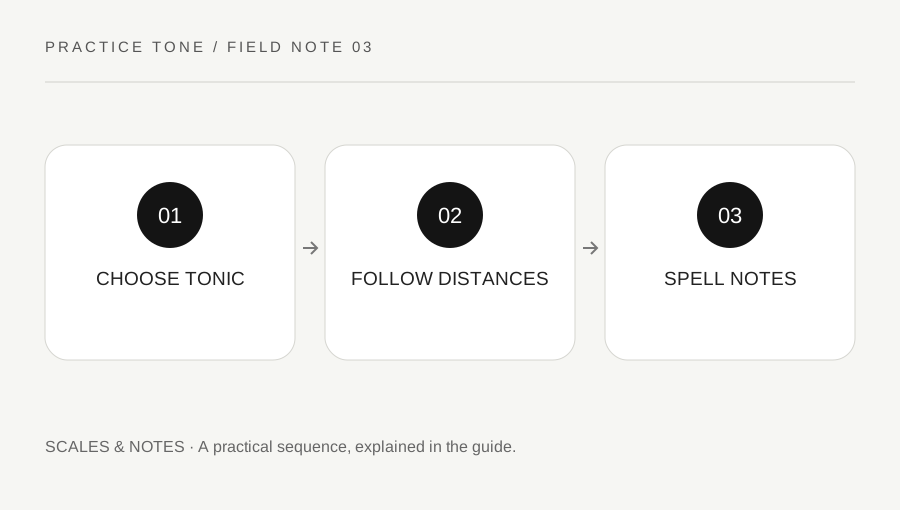
SaveLearning & workBuild a Major Scale From Whole Steps and Half StepsA major scale is defined by its interval pattern, not by using only white piano keys. Start on a chosen tonic, follow the distances and give each scale degree a clear name.4 min read
SaveLearning & workA First Metronome Session: Keep the Beat Without Chasing ItA metronome makes an even pulse audible. Use a short, simple task so that the clicks reveal your timing instead of becoming another sound you struggle to follow.4 min read
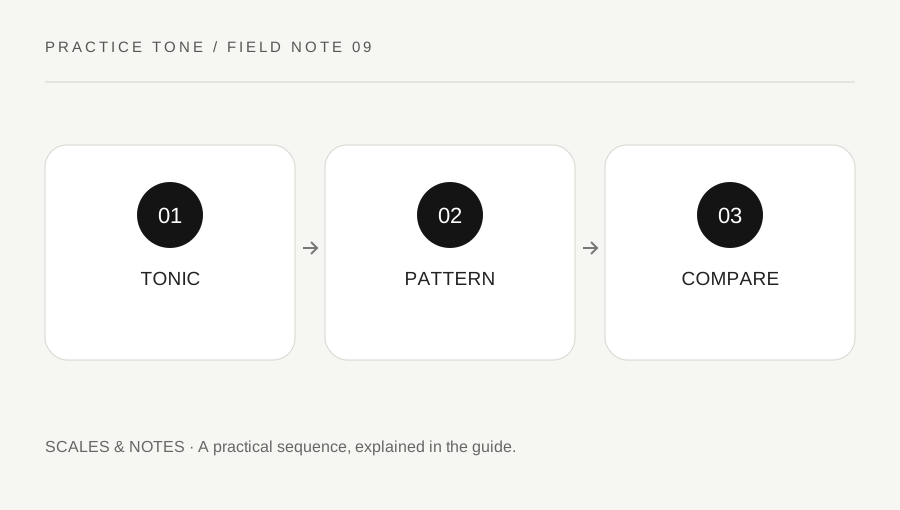
SaveLearning & workNatural Minor: Build the Pattern and Compare the ThirdNatural minor has its own interval pattern. Compare it with a major scale from the same tonic, then distinguish that parallel relationship from two scales that share the same note collection.3 min read