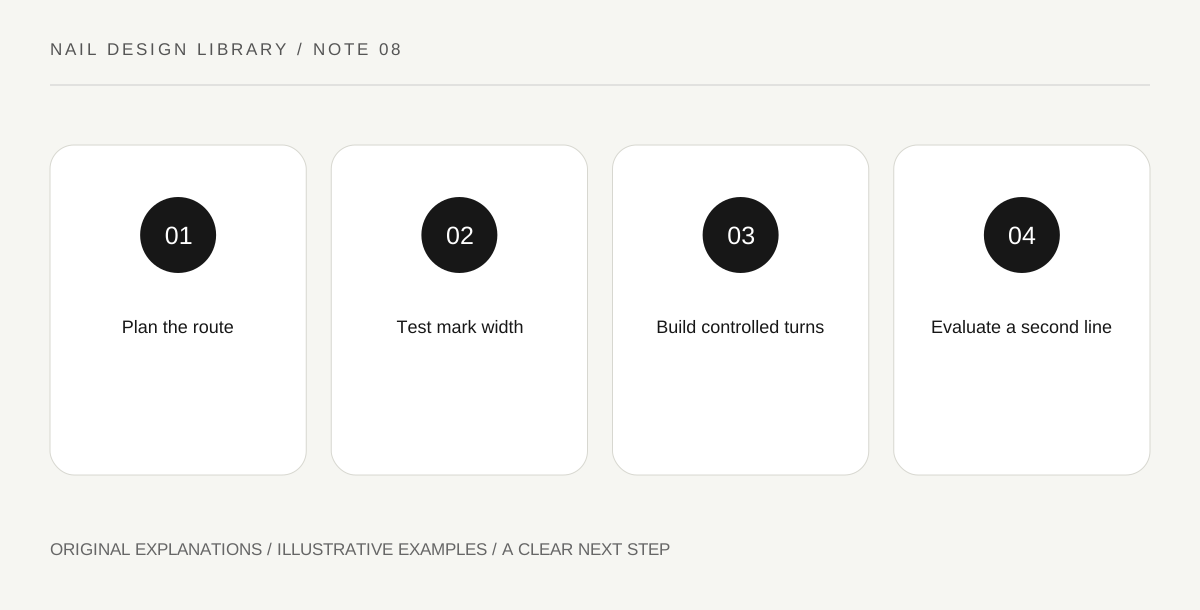
SaveStyle & beautyPaint an abstract wave by controlling width and directionA wave line can feel calm, energetic or graphic depending on its route and thickness. It does not need to imitate water literally. Plan one curve, practise its turns and decide whether a second line supports it before filling the surface with repeated swirls.20 October 2026 · 3 min read
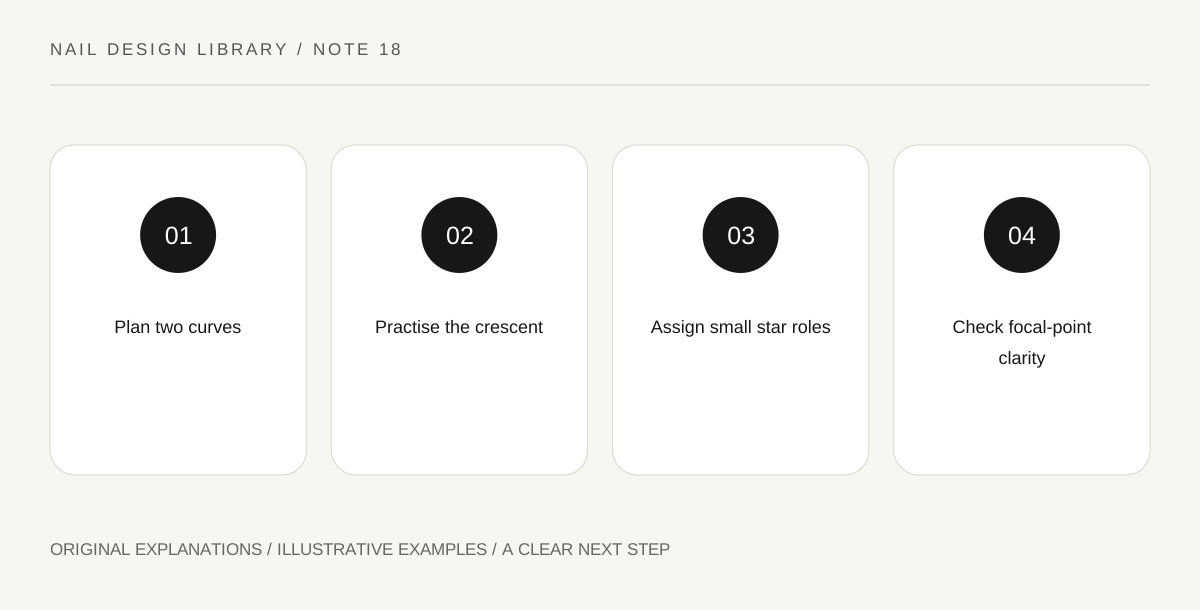
SaveStyle & beautyArrange a crescent moon and small stars with a clear focal pointA celestial motif combines a crescent with a few small marks that suggest stars. The moon should remain the main shape rather than disappear in a field of equal dots. Plan its curve and the surrounding space, then decide how many companions the surface can hold.20 October 2026 · 3 min read
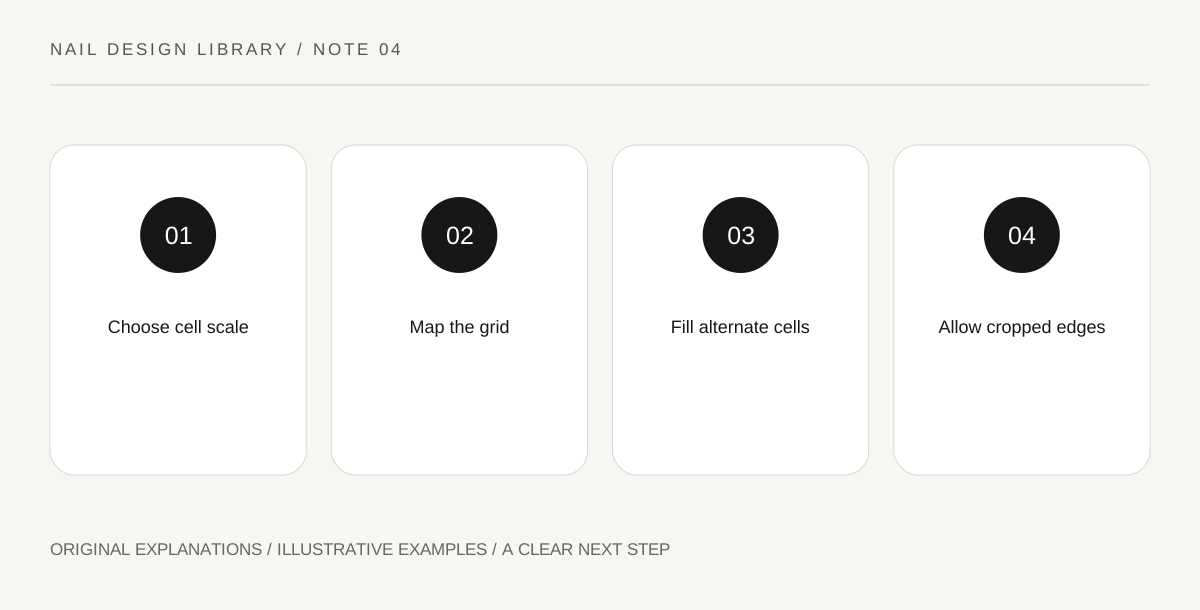
SaveStyle & beautyPaint a checkerboard accent by building a manageable gridA checkerboard is a repeated grid, so a small alignment error can affect the whole pattern. Keep the design manageable by choosing fewer cells and one accent area. Map the grid before filling alternate spaces, and let the nail’s curved outline crop the pattern naturally.20 October 2026 · 3 min read
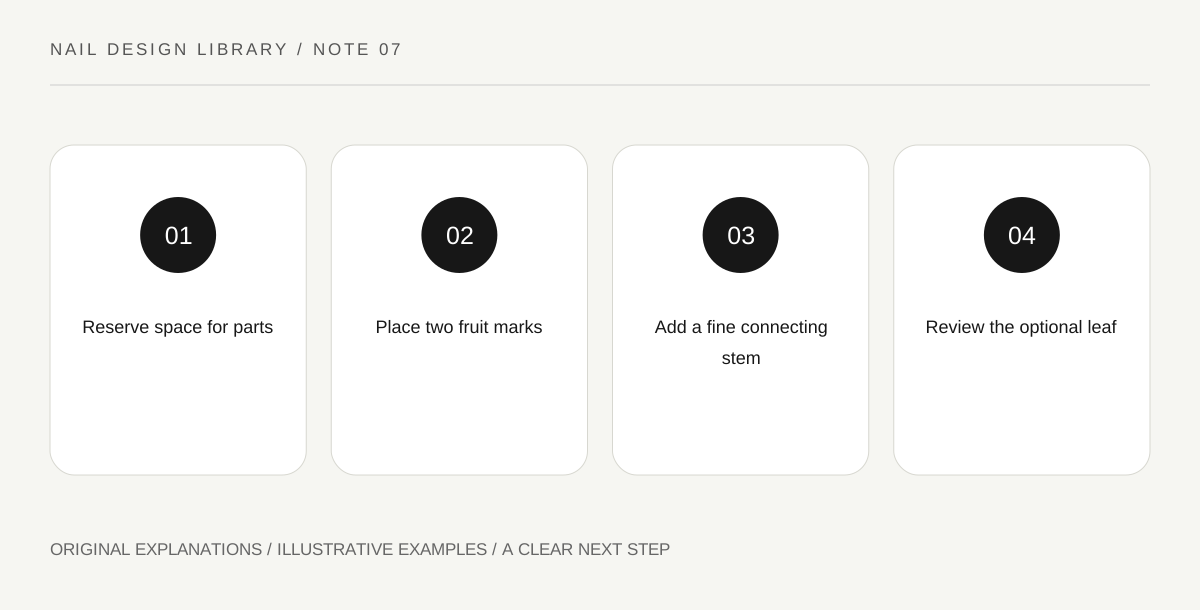
SaveStyle & beautyPaint a cherry-pair motif with clear fruit and stem shapesA tiny cherry pair uses two round shapes and a connecting stem as a simple visual shorthand. The challenge is keeping the parts distinct at a small scale. Plan the fruit size first, then add a thin stem and optional leaf without turning the motif into a crowded patch.20 October 2026 · 3 min read
SaveStyle & beautyCreate a diagonal two-colour split with a clear angleA diagonal split turns one nail into two colour fields. Its effect depends on the angle, the relative areas and the contrast between the colours. Plan those relationships on an outline first, then practise a controlled boundary without assuming a perfectly straight line is the only successful result.20 October 2026 · 3 min read
SaveStyle & beautyCreate a fine-line lattice with fewer intersectionsA lattice uses crossing lines while leaving the spaces between them visible. The difficulty lies in keeping intersections from becoming heavy spots. Start with a sparse grid, plan the line order and compare the empty cells before deciding whether the pattern needs more detail.20 October 2026 · 3 min read
SaveStyle & beautyBuild a tiny daisy from separate petal dotsA small daisy can be constructed from a centre and a ring of petal marks. The challenge is leaving enough separation for the flower to remain readable. Practise one blossom before creating a cluster, and use placement rather than more detail to make the miniature design interesting.20 October 2026 · 3 min read
SaveStyle & beautyBuild a four-point sparkle from crossed tapered linesA four-point sparkle can suggest a star with only a few marks. Its centre, long axis and tapering ends carry the shape. Practise one readable symbol before adding smaller companions, and distinguish a deliberate sparkle motif from a conventional five-point star outline that requires a different construction.20 October 2026 · 3 min read
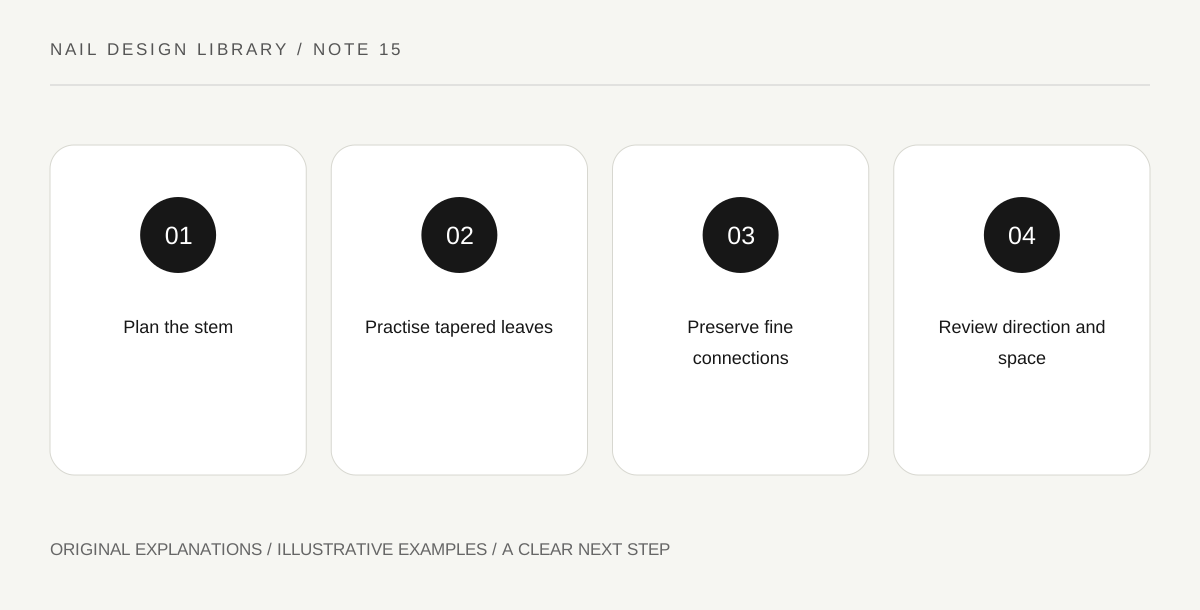
SaveStyle & beautyPaint a leaf sprig with a clear stem and alternating shapesA leaf sprig can be built from a fine stem and a few small tapered marks. The design works when the stem remains visible and the leaves have room to turn. Practise the direction of each part before adding another sprig or trying to represent a specific plant.20 October 2026 · 3 min read
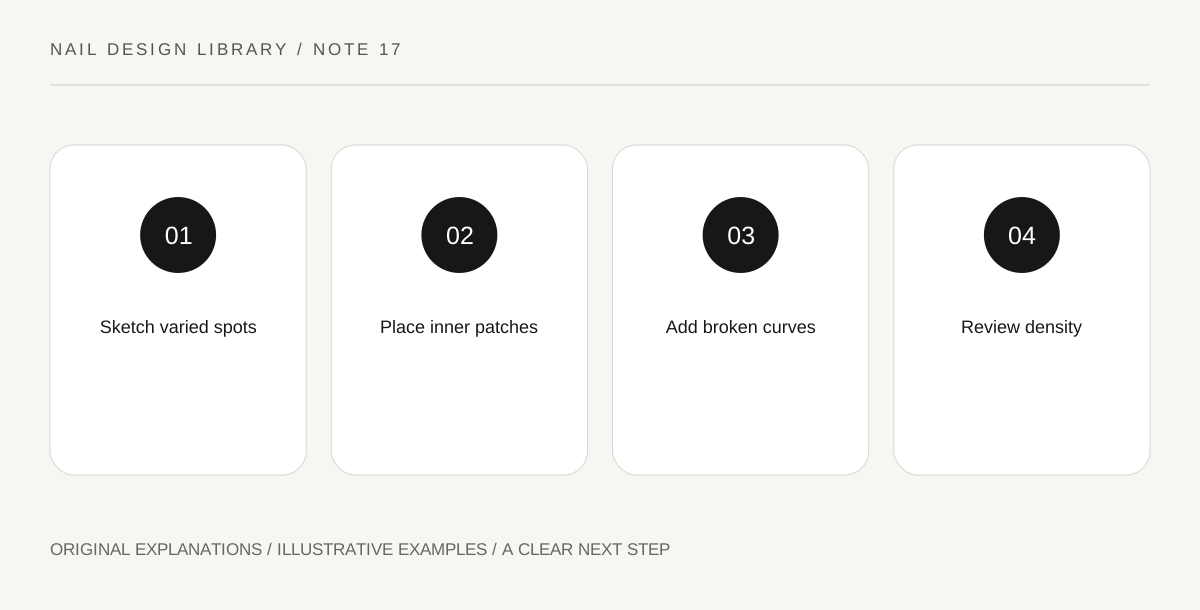
SaveStyle & beautyCreate leopard-inspired spots with broken outlinesA leopard-inspired print is a stylized pattern of irregular spots and open outline marks. It should not become a page of identical circles. Practise a few varied forms, use a limited palette and leave enough base visible that the pattern remains readable on a small surface.20 October 2026 · 3 min read
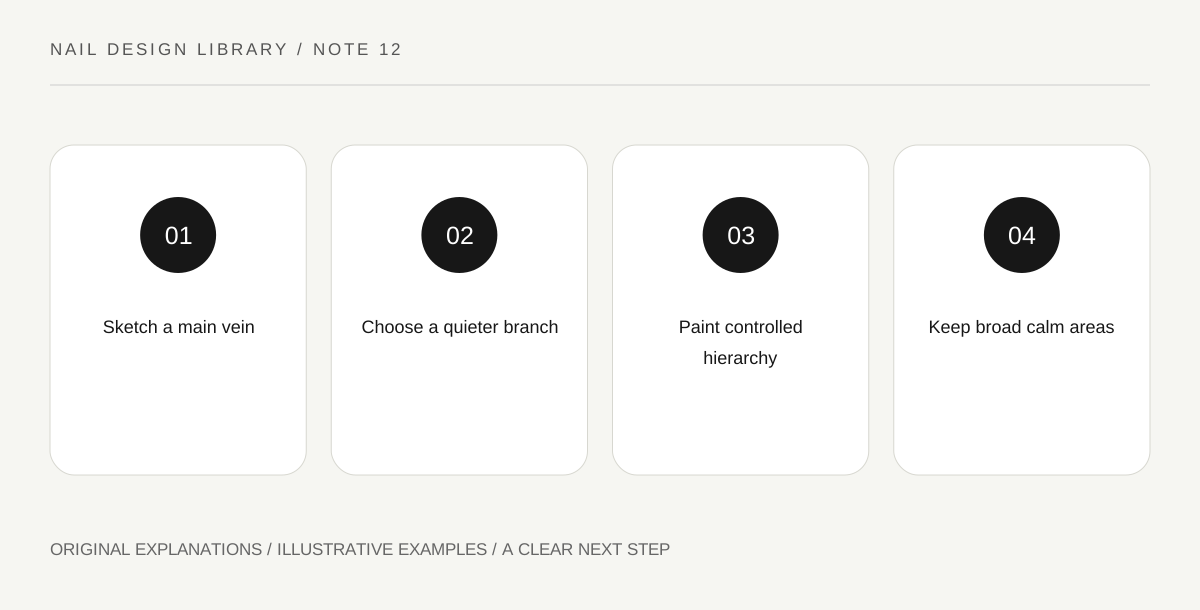
SaveStyle & beautyDraw marble-inspired veins without turning them into a regular gridMarble-inspired nail art is an abstract interpretation of branching lines and quiet colour variation. It does not require reproducing a particular stone. Plan a few irregular routes, leave large areas calm and keep the veins varied enough that the design does not become a tidy lattice.20 October 2026 · 3 min read
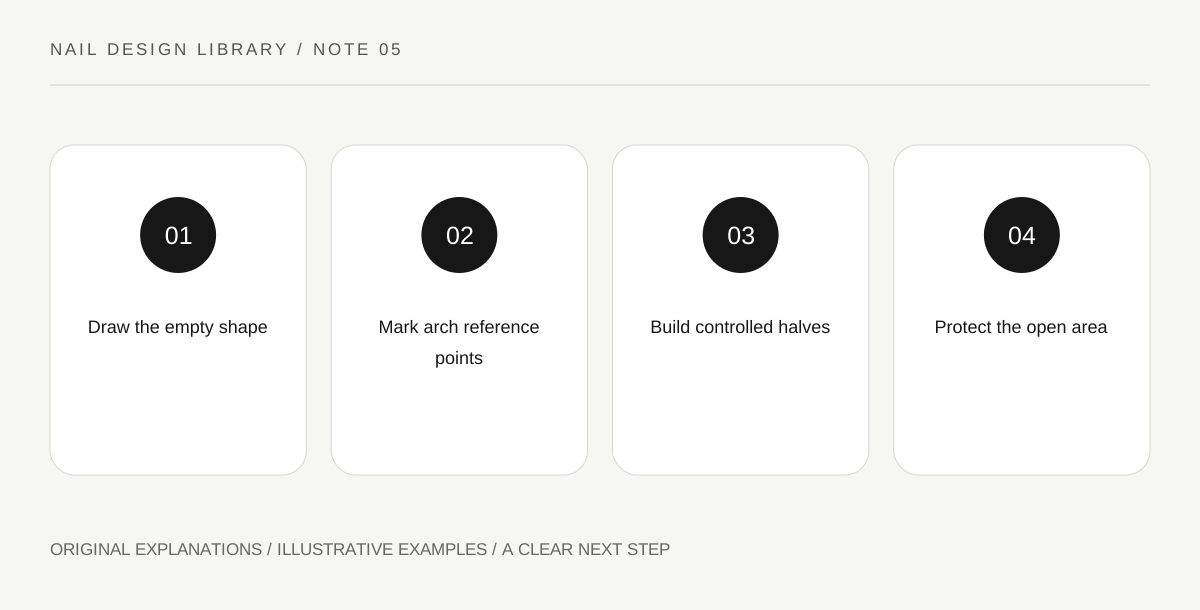
SaveStyle & beautyDesign an open arch with clear negative spaceAn open arch uses the unpainted or visibly clear area as part of the design. The outline and the gap need to work together. Plan the arch on a practice outline, choose a manageable line width and avoid filling every empty area merely because it is available.20 October 2026 · 3 min read