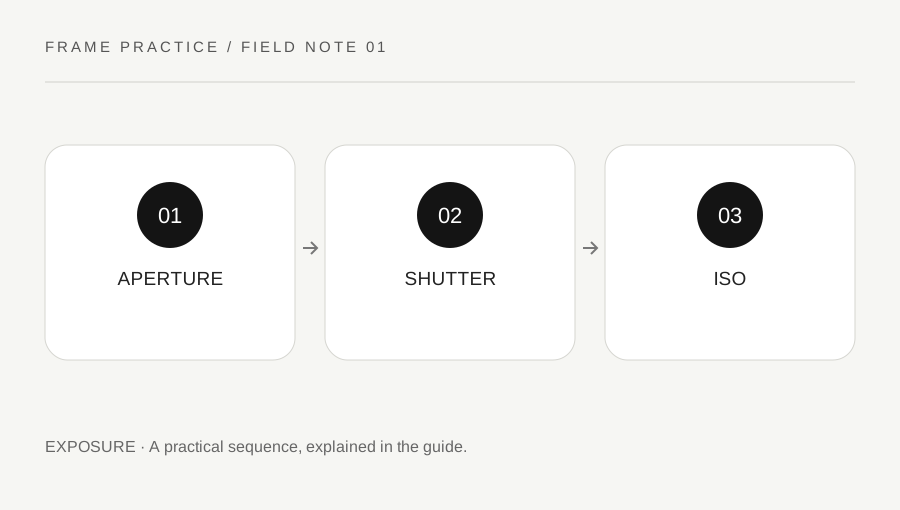
SaveLearning & workAperture, Shutter Speed and ISO: Read the Trade-OffsCamera settings are easier to understand when each has a job. Choose the look you need, then decide which setting can compensate.3 min read
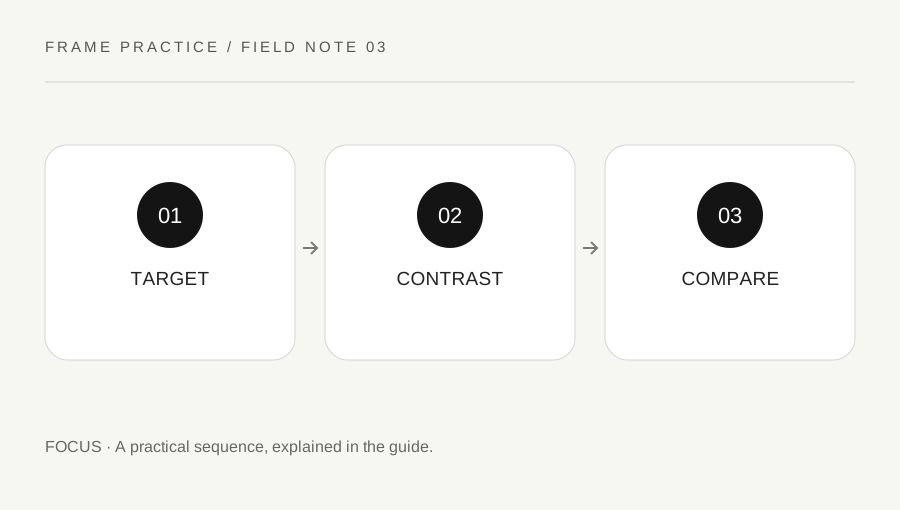
SaveLearning & workAutofocus Hunts: Give It a Clearer Target Before Changing EquipmentA blank wall, reflective surface or small distant subject can make focus acquisition difficult. Read the camera’s limitations and compare a clearer target before treating every hunting lens as a fault.18 October 2026 · 3 min read
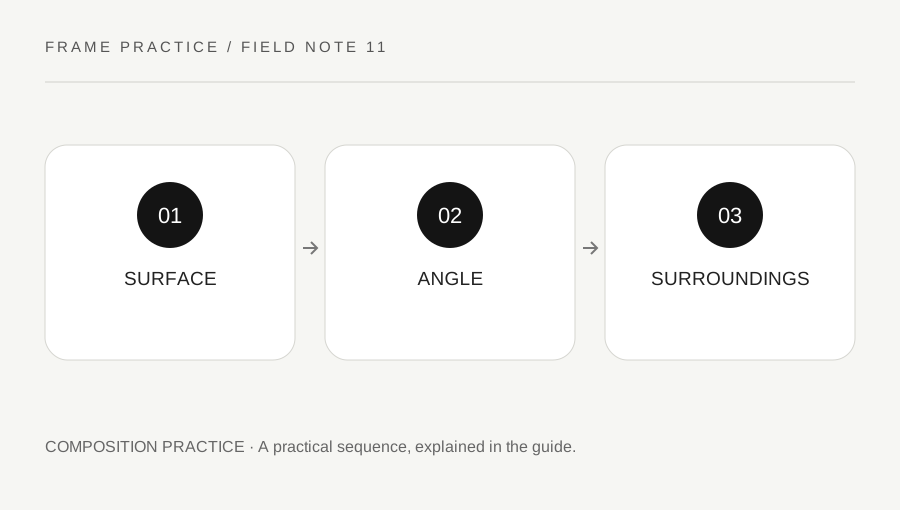
SaveLearning & workControl Reflections in a Still Life by Changing the ArrangementA reflection is part of what the surface shows the camera. Move carefully, simplify the surroundings and compare the result before assuming an editing tool or filter will remove every problem.18 October 2026 · 3 min read
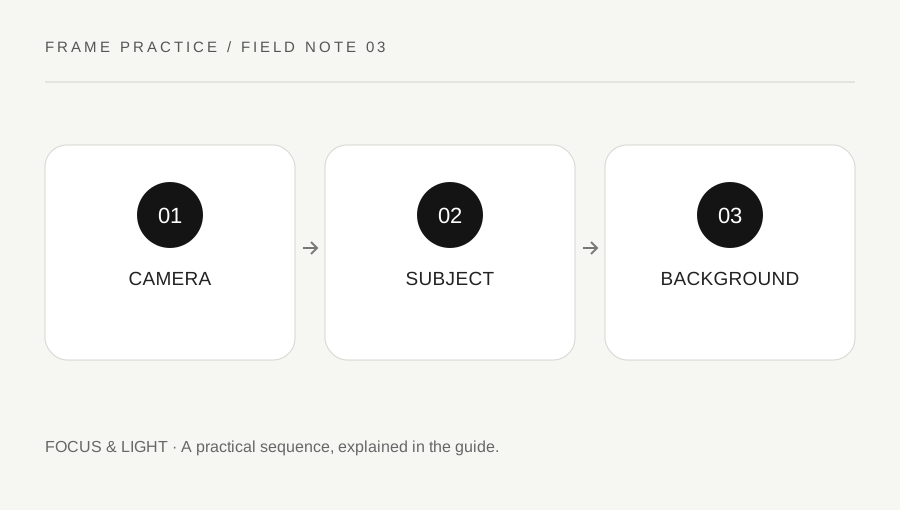
SaveLearning & workDepth of Field: Change Distance Before Buying a New LensBackground softness is influenced by more than the aperture number. Start with the arrangement of camera, subject and background.3 min read
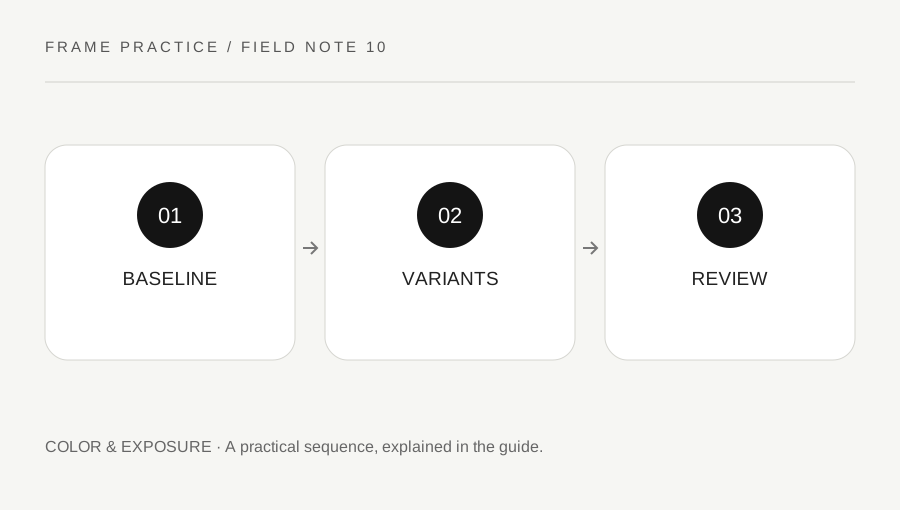
SaveLearning & workExposure Bracketing for a Static Scene: Keep the Sequence UnderstandableA bracket gives you several exposure variants to review. Read which settings the camera changes, keep the scene stable and do not confuse a comparison sequence with an automatically finished HDR photograph.18 October 2026 · 3 min read
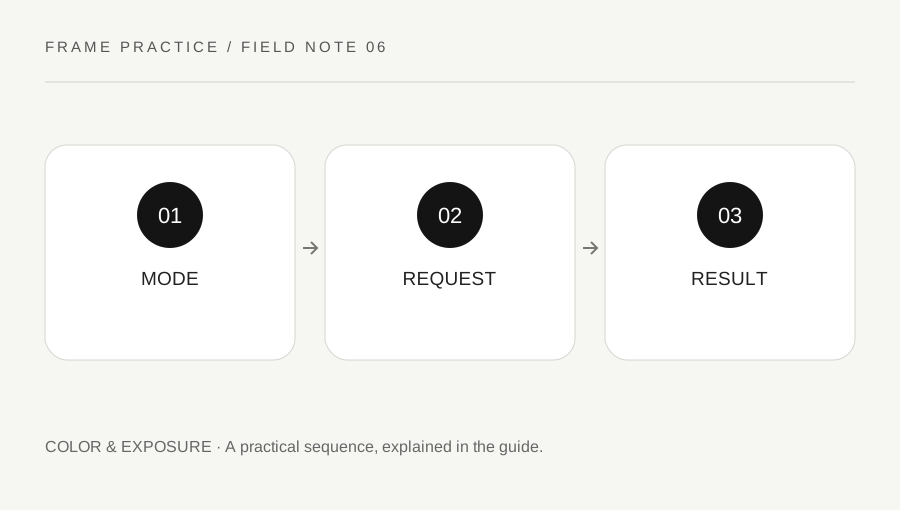
SaveLearning & workExposure Compensation: Check What the Camera Is Allowed to ChangeExposure compensation is a request within a camera mode, not a separate source of light. Read which settings remain automatic, then review the resulting shutter, aperture and ISO choices.18 October 2026 · 3 min read
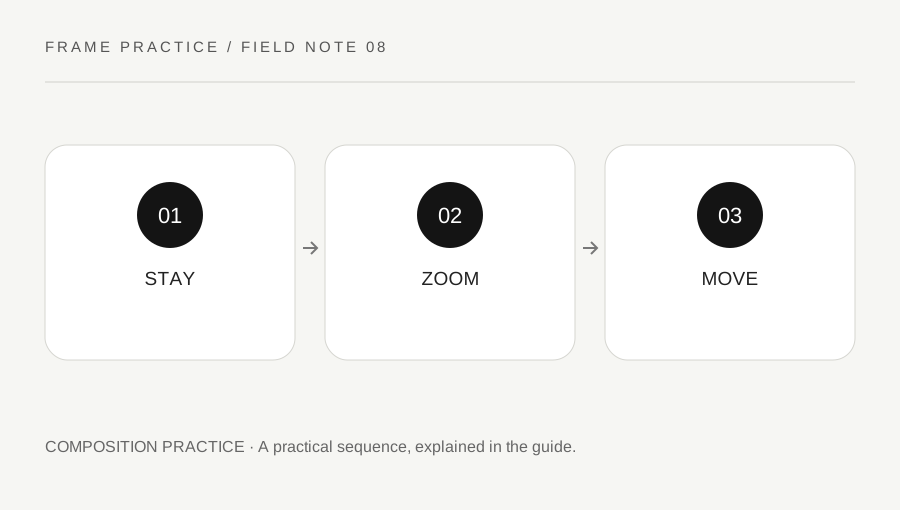
SaveLearning & workFocal Length and Camera Position: Make Two Different ComparisonsChanging focal length changes the view, while moving the camera changes the spatial relationship you see. Keep those actions separate in a simple exercise before deciding that a lens creates one inevitable look.18 October 2026 · 3 min read
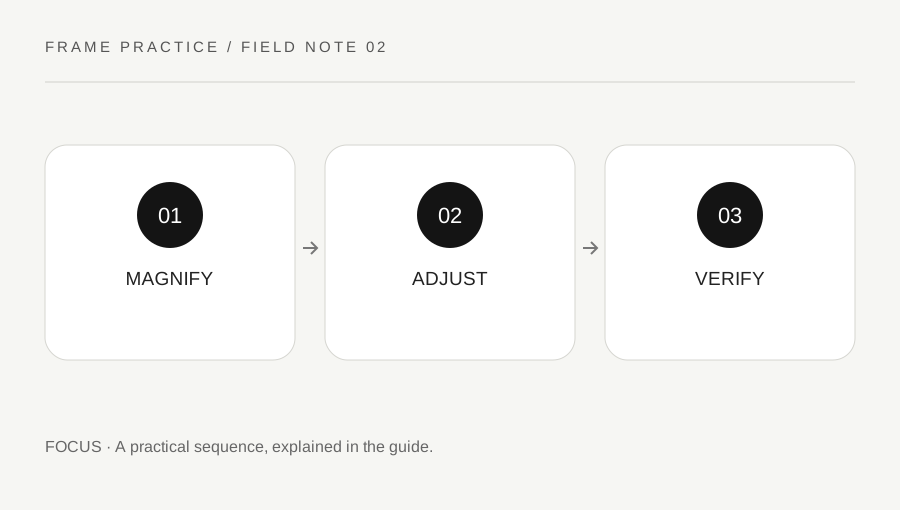
SaveLearning & workManual Focus with a Magnified View: Check the Detail Before CaptureA magnified monitor view can help you place focus on a static detail. Use the camera’s supported controls and verify the captured image instead of assuming a highlighted edge proves everything is sharp.18 October 2026 · 3 min read
SaveLearning & workPhone Photos of a Static Subject: Set the Focus and Review the ExposureA phone can make many decisions automatically, but a simple focus-and-exposure check still helps. Use the controls supported by your device and compare the saved image rather than only the live preview.18 October 2026 · 3 min read
SaveLearning & workA Composition Edge Check: Improve the Frame Before Pressing the ShutterA composition does not become clear because a grid is visible. Check what the frame includes, what it cuts off and where your attention goes.3 min read
SaveLearning & workPhotograph a Small Object with a Clear Sense of ScaleA close view can show detail while making size ambiguous. Decide whether the photograph is a creative image or an explanatory record, then use a suitable reference without hiding the object.18 October 2026 · 3 min read
SaveLearning & workRAW or JPEG: Choose a Photo Workflow You Can Actually CompleteA capture format is a workflow choice, not a badge of seriousness. Check editing needs, storage, compatibility and delivery before deciding whether RAW, JPEG or a supported combined option fits the task.18 October 2026 · 3 min read