Learning & workThirty-seven subjects. Twenty new posts in each journal.
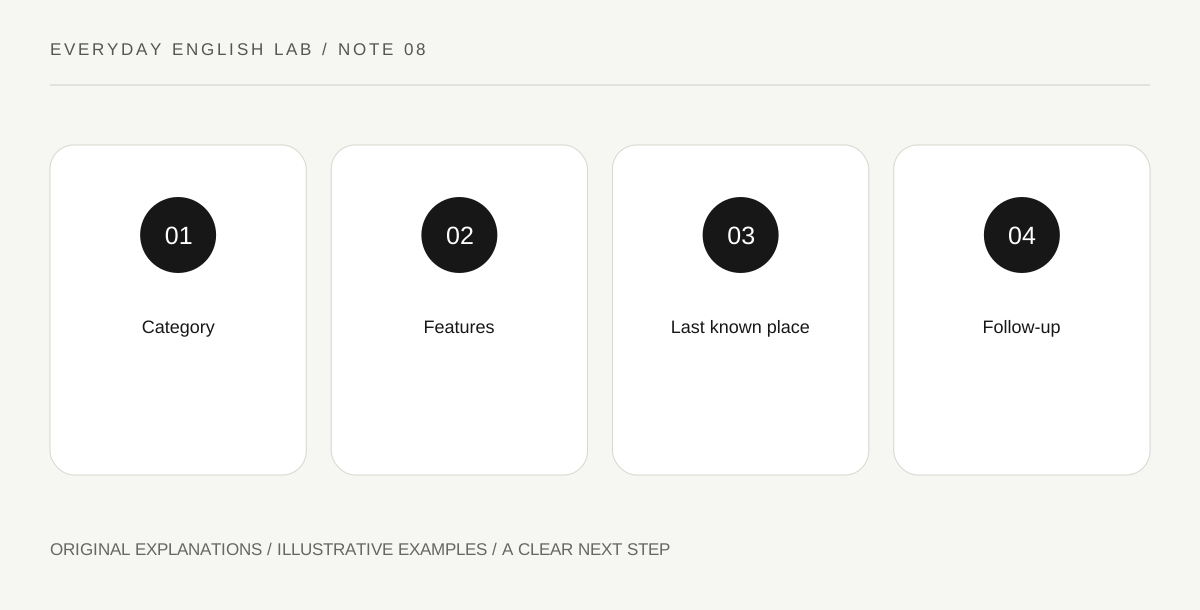
Learning & workA lost-property description should help someone choose one object from several similar ones. Practise moving from a general noun to distinctive features, then explaining when you last had the item. Use fictional objects and details when sharing practice recordings.
20 October 2026 · 3 min read
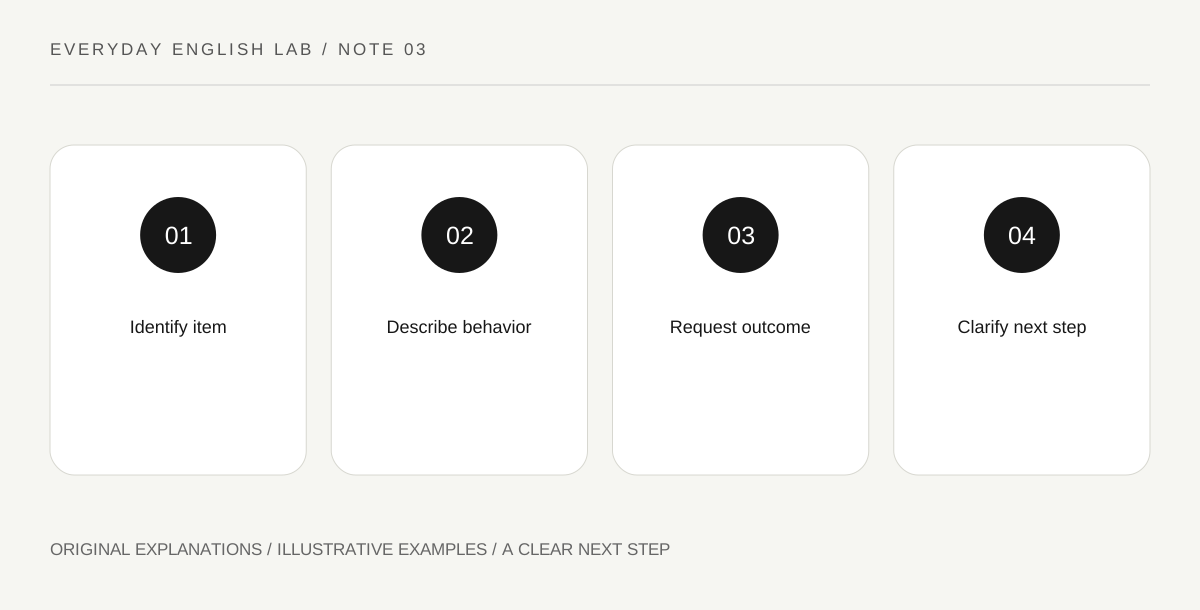
Learning & workA return conversation becomes easier when you describe the item and its problem before asking what options are available. Practise observable details, simple past events and a specific request. This is language practice; store policies and consumer rights depend on the situation.
20 October 2026 · 3 min read
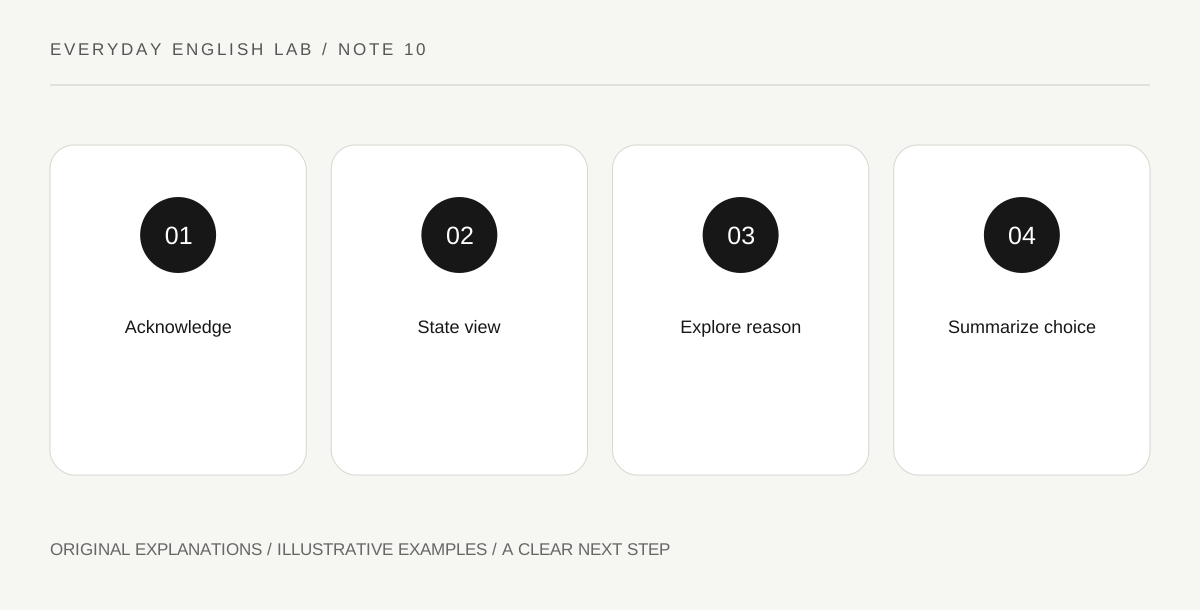
Learning & workClear disagreement can remain courteous. This lesson practises recognizing another person’s point, stating your different view and explaining one reason. You do not need an elaborate expression or a false agreement before you are allowed to express a different preference.
20 October 2026 · 3 min read
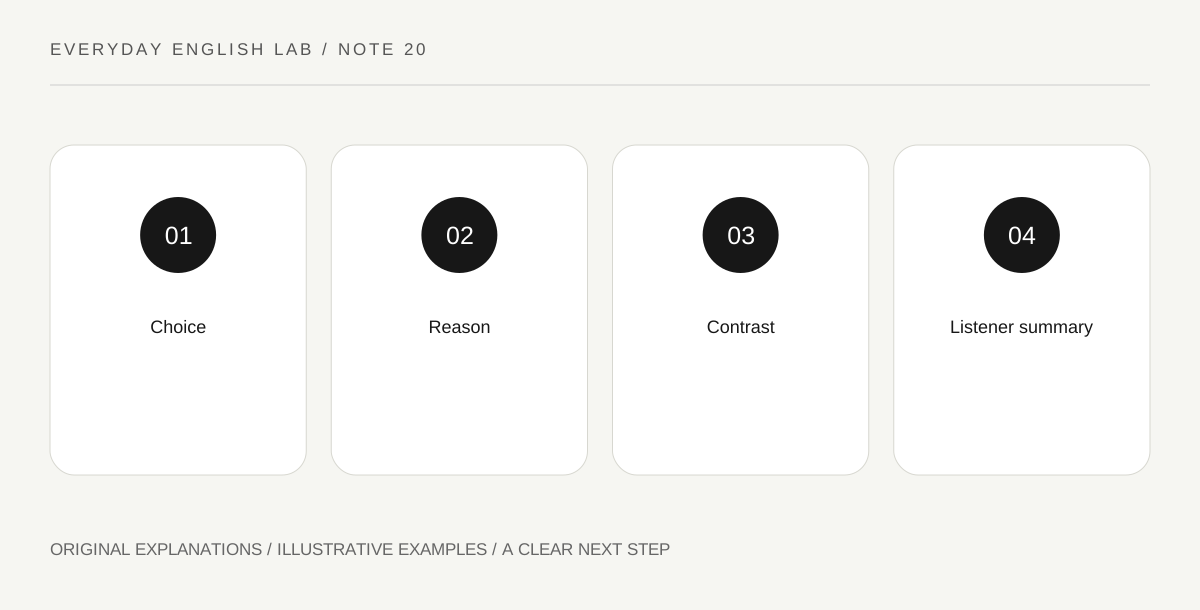
Learning & workA choice can have a reason and a drawback at the same time. Practise explaining both without losing your main decision. This lesson uses ordinary plans and objects so you can concentrate on the relationship between ideas rather than on specialized vocabulary.
20 October 2026 · 3 min read
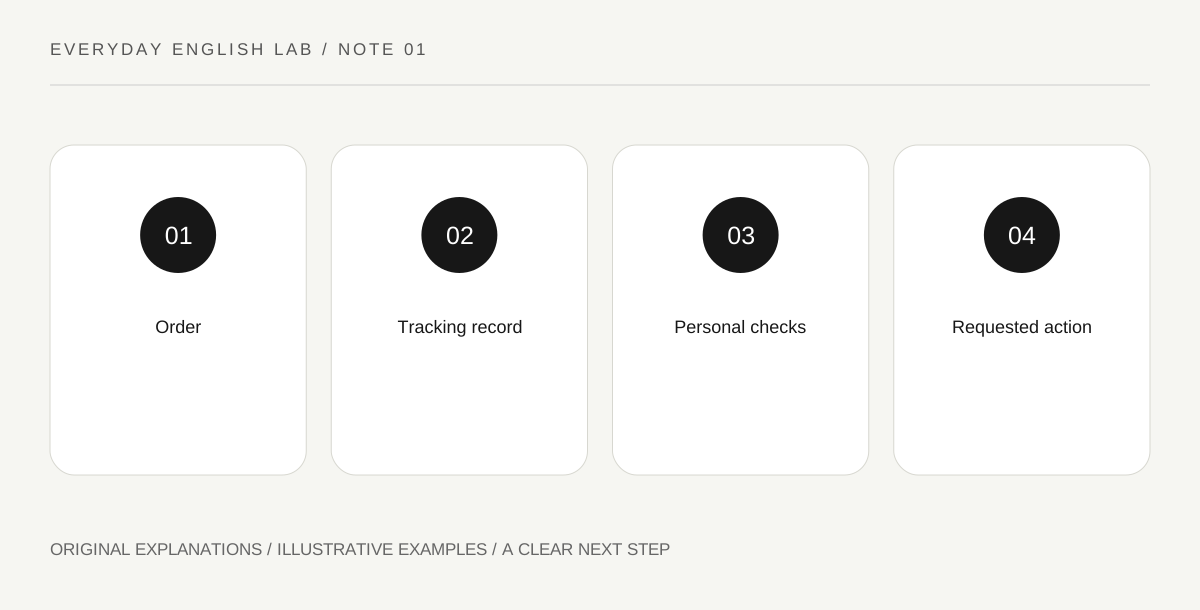
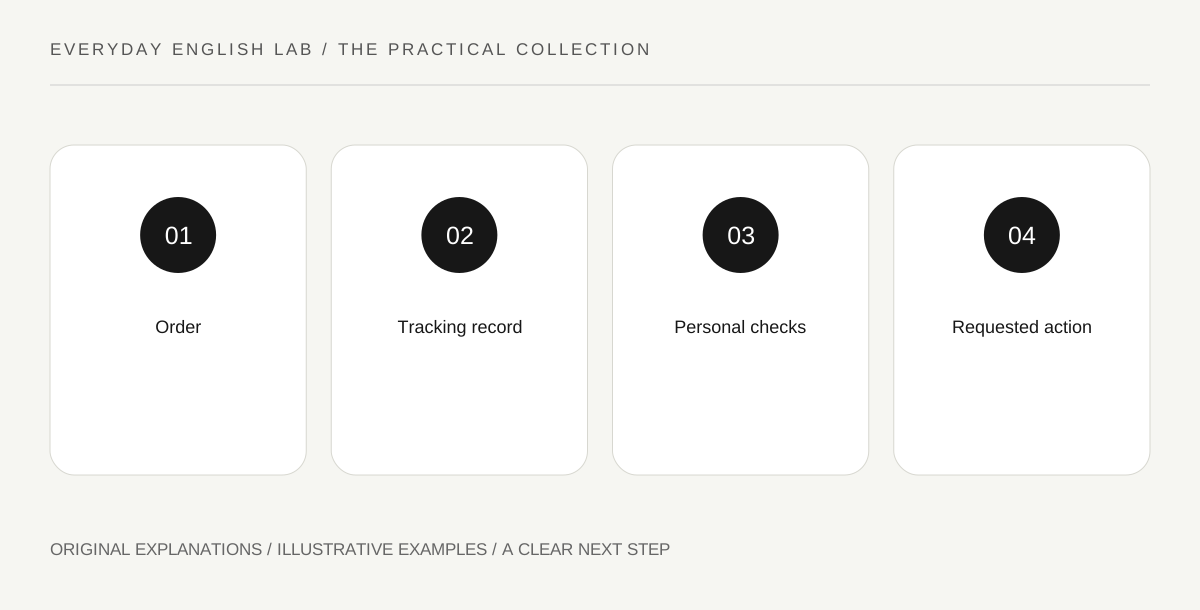
Learning & workWhen a parcel has not arrived, a clear sequence helps the other person find the problem. Practise separating what the tracking page said, what you personally observed and the action you are requesting. You can sound calm without hiding that you need help.
20 October 2026 · 3 min read
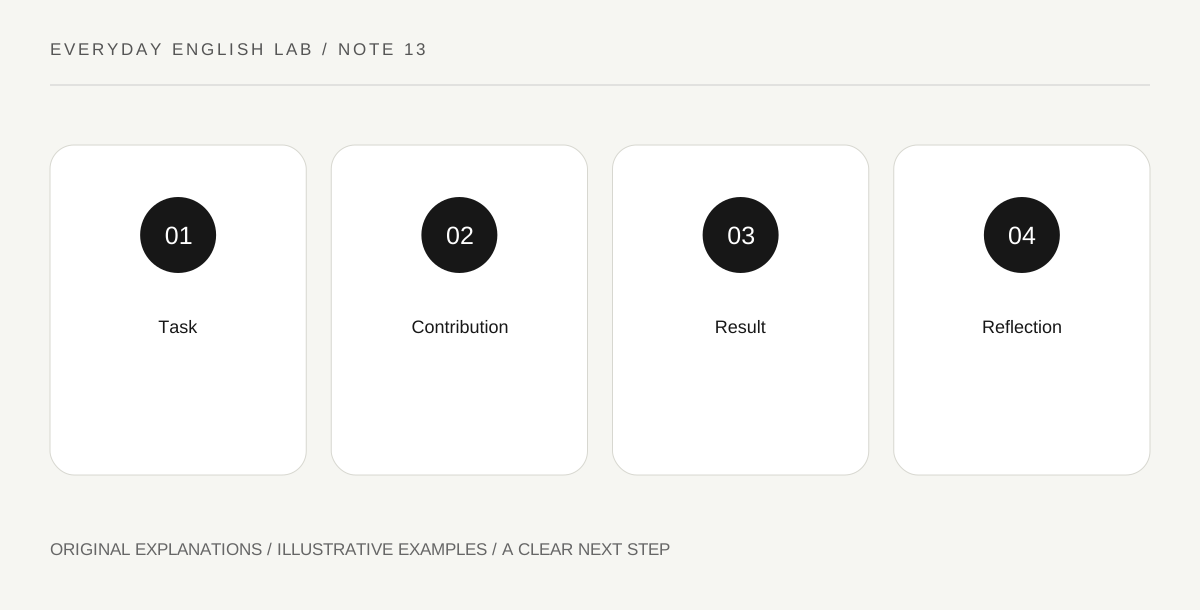
Learning & workWhen someone asks about previous experience, a list of job titles may not show what you did. Practise one short explanation of a task, your contribution and its result. Use a fictional project if you are learning in a public group.
20 October 2026 · 3 min read
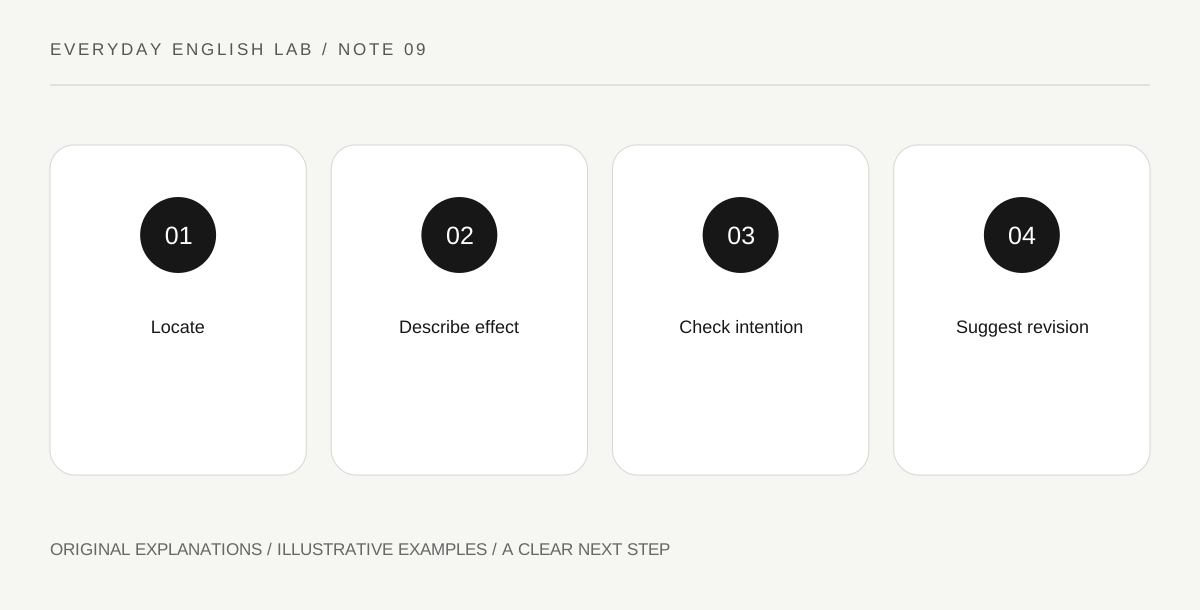
Learning & workFeedback becomes easier to act on when it points to a specific part of the work and explains the reader’s experience. Practise describing one useful feature, one difficulty and one possible revision without turning a comment into a judgment about the writer.
20 October 2026 · 3 min read
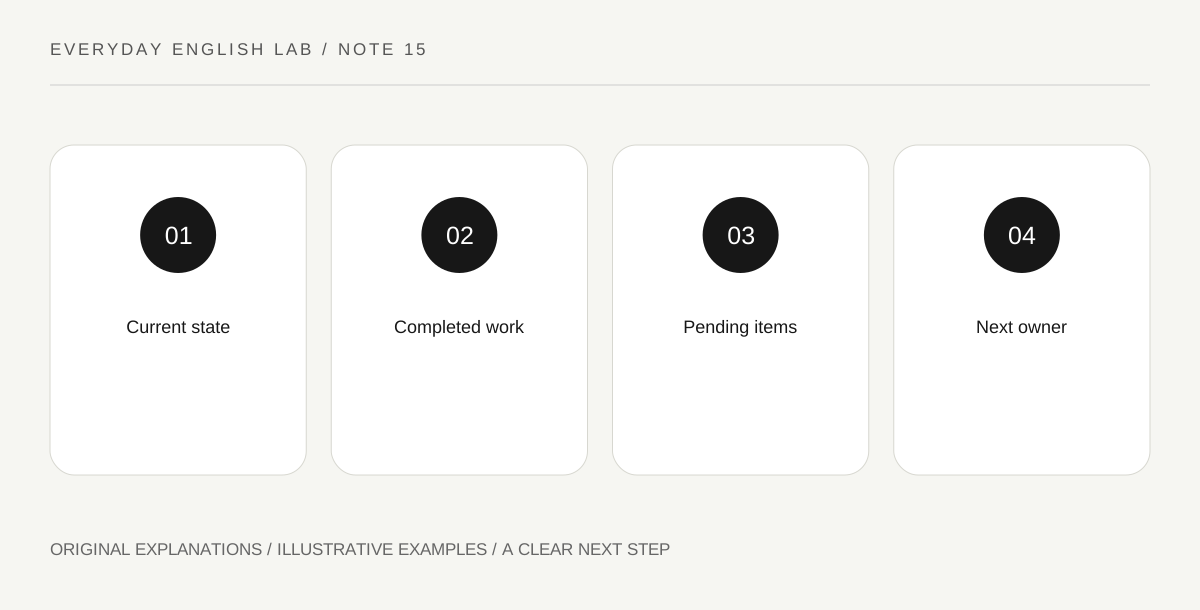
Learning & workA task handover should let another person continue without reconstructing your whole day. Practise dividing the message into what is finished, what remains and what the next person should do. This structure works well with a small fictional office or club task.
20 October 2026 · 3 min read
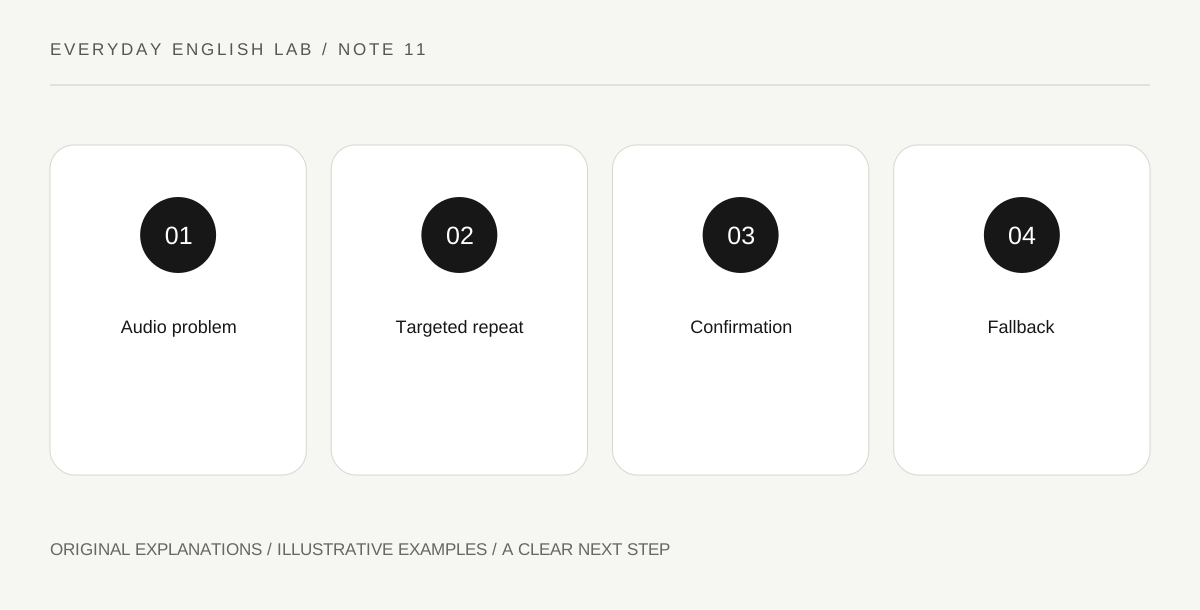
Learning & workA poor phone connection can make familiar English feel unfamiliar. Practise identifying the missing part, requesting a targeted repeat and changing the communication channel when appropriate. The skill is to repair the conversation with enough detail for the other speaker to help.
20 October 2026 · 3 min read
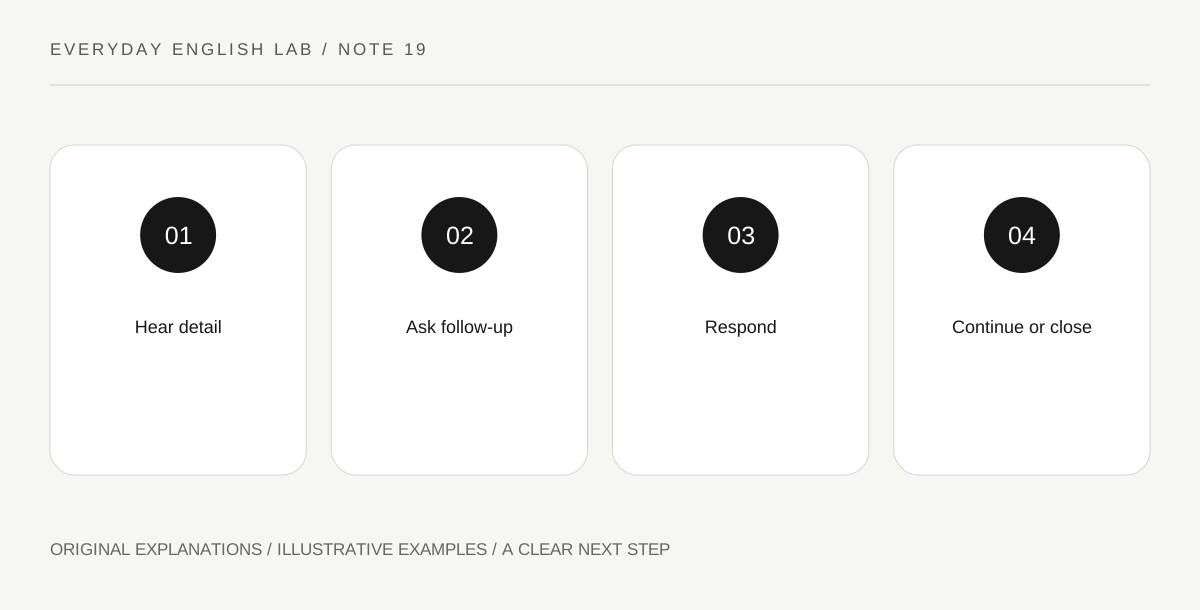
Learning & workA follow-up question works best when it connects to something the other person has just said. Practise listening for one detail, asking about it and sharing a small related response. The goal is a balanced exchange rather than a sequence of unrelated interview questions.
20 October 2026 · 3 min read
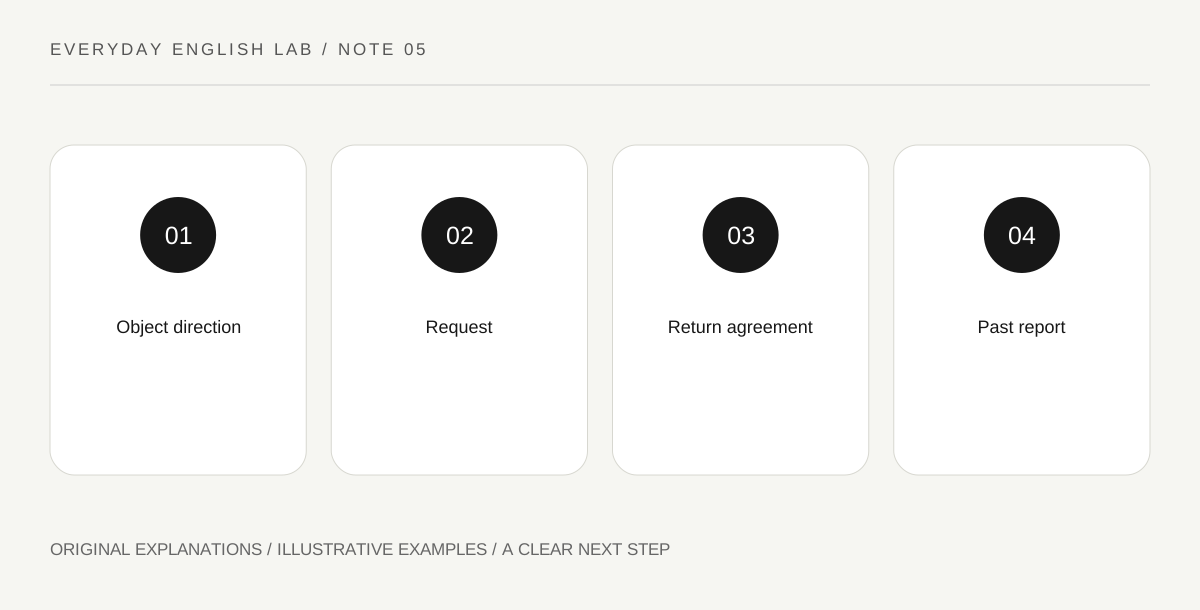
Learning & workBorrow and lend describe the same temporary transfer from different directions. A practical object exchange makes the distinction easier to remember than memorizing two isolated translations. This lesson adds return arrangements so the whole interaction has a clear endpoint.
20 October 2026 · 3 min read