SaveTravel & outdoorsArles: separate Roman from Romanesque before building a timelineTwo similar-looking words can create a surprisingly large misunderstanding in a historic city. In Arles, give Roman and Romanesque separate entries before comparing monuments. The exercise is partly about chronology and partly about language: the name of a later architectural tradition should not quietly become a claim that a building belongs to ancient Rome.20 October 2026 · 3 min read
SaveTravel & outdoorsAvignon: let the surviving bridge ask a different question from the palaceA palace and a bridge can share one heritage title while asking visitors to notice very different things. In Avignon, treat the surviving bridge as evidence of a former connection and the papal complex as an institutional ensemble. A focused comparison can reveal how power, movement and the river setting belong together without turning them into one undifferentiated monument stop.20 October 2026 · 3 min read
SaveTravel & outdoorsBamberg: add a growing-and-distributing question to the old-town visitAn old town can be remembered entirely through monumental buildings even when food production is part of its historic urban story. In Bamberg, add a question about growing and distribution to the visit. This changes which map features and interpretation you seek without turning private gardens into visitor attractions or inventing a surviving medieval supply chain.20 October 2026 · 3 min read
SaveTravel & outdoorsBrugge: connect a narrow plot to a public institutionA Brugge visit can move beyond collecting attractive street scenes by comparing two scales: the individual urban plot and the larger public institution. Choose a modest stretch of street and one identified civic or religious building. The question is how private edges and collective spaces help make the historic centre understandable as a working town.20 October 2026 · 3 min read
SaveTravel & outdoorsČeský Krumlov: use the river meander as an orientation questionA curving river can make a small town feel surprisingly difficult to hold in one mental picture. In Český Krumlov, compare the map’s river shape with a few identified views from permitted public spaces. The task is to understand the relationship among town, river and castle, without making a riverbank shortcut or a panoramic climb part of the exercise.20 October 2026 · 3 min read
SaveTravel & outdoorsThe new monochrome journal collectionThirty-seven subjects. Twenty new posts in each journal.
SaveTravel & outdoorsFerrara: distinguish the Renaissance extension from the wider Po Delta propertyA long heritage title can conceal two very different scales of travel. In Ferrara, separate a close study of urban planning from an interest in the wider Po Delta cultural landscape. Begin with one question about the city’s Renaissance extension, then decide whether a second landscape question deserves a separate plan instead of treating the title as a ready-made day trip.20 October 2026 · 3 min read
SaveTravel & outdoorsA Flemish béguinage: read the community without treating homes as exhibitsAn enclosed historic community may look like a ready-made museum route, yet its residential character deserves a different kind of attention. At a Flemish béguinage, focus on the relationship between shared space and individual thresholds. The exercise is to understand a community’s spatial organization while keeping present residents and access boundaries visible in your planning.20 October 2026 · 3 min read
SaveTravel & outdoorsGraz and Eggenberg: turn one heritage title into two different studiesA shared heritage designation can make a city centre and a palace seem like one continuous attraction. For Graz and Schloss Eggenberg, choose two distinct observation tasks before deciding whether both belong in the trip. The useful comparison asks how urban fabric and a designed estate express related histories at different scales and under different visitor arrangements.20 October 2026 · 3 min read
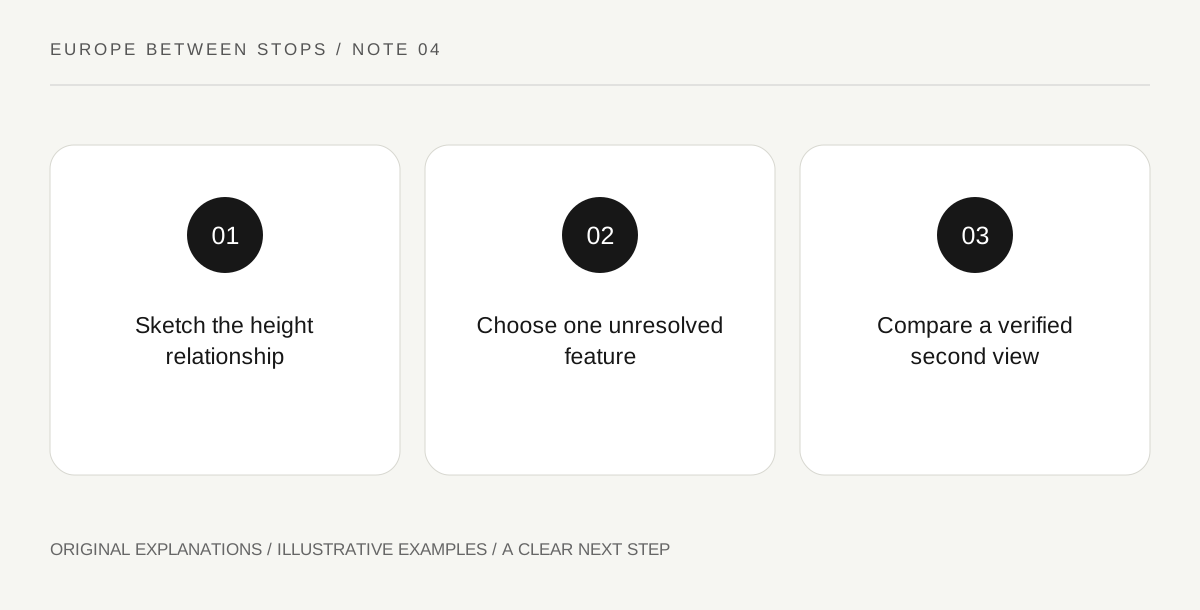
SaveTravel & outdoorsLuxembourg: make a vertical sketch before choosing a second viewpointTwo points that look close on a flat map can tell very different stories in Luxembourg’s old quarters. Begin with a sketch of height and separation instead of immediately joining every visible landmark. This turns the city’s fortified setting into an observation question and keeps the wish to understand a landscape separate from assumptions about how to move through it.20 October 2026 · 3 min read
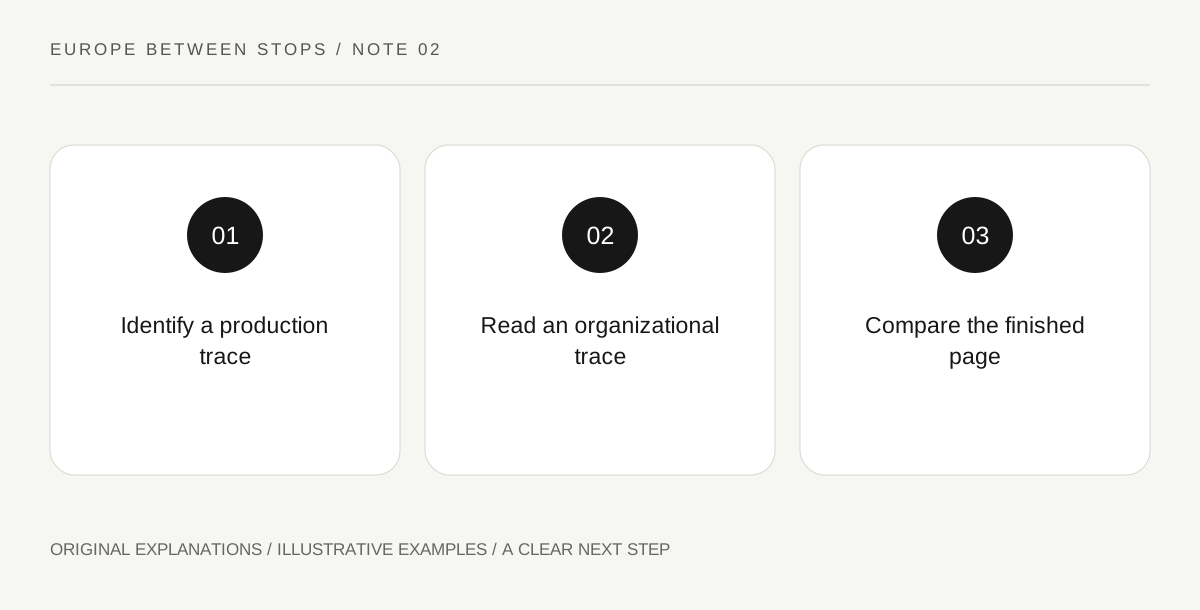
SaveTravel & outdoorsAntwerp’s Plantin-Moretus complex: follow the evidence behind a printed pageAt a printing museum, a press can dominate attention so completely that publishing disappears. Use the Plantin-Moretus complex to ask how an object, an archive and a finished page provide different kinds of evidence. A focused visit follows a question about production and business rather than trying to memorize every machine or reproduce its operation.20 October 2026 · 3 min read
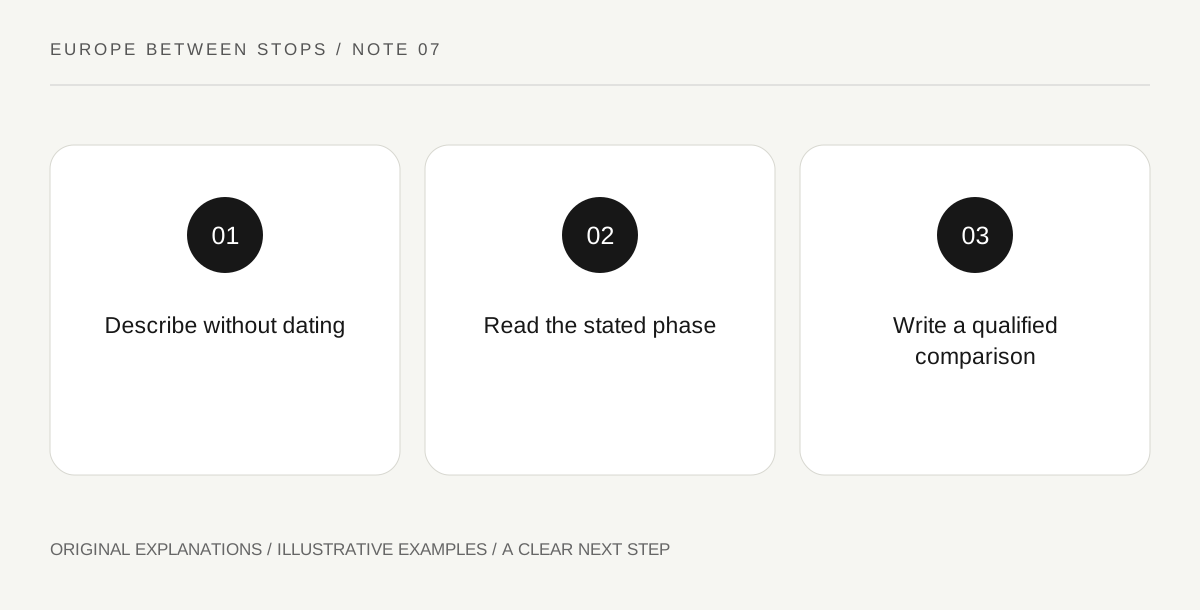
SaveTravel & outdoorsQuedlinburg: describe timber framing before guessing its ageTimber framing offers a memorable visual pattern, but a pattern is not a construction date. In Quedlinburg, separate a careful description of a house front from the historical claims attached to it. A short two-building comparison can reveal how easily the phrase medieval town becomes an unsupported date for every building in a photograph.20 October 2026 · 3 min read